


Read this article in 中文 Français Deutsch Italiano Português Español
Opinion: Paul Burger on construction equipment OEM strategies
04 September 2026
Paul Burger has more than three decades experience in the construction equipment industry, including a long period in senior management roles at Hitachi Construction Machinery (Europe). Now working as an independent consultant, he has views on how OEMs should approach the management of key accounts, and on the impact of Chinese manufacturers.
I read recently in an article in various KHL Group magazines and websites about the strategy of a major OEM towards two ‘headache files’ for global OEMs: namely, how to approach the known key accounts operating in Europe, and what strategy to adopt regarding the impact of Chinese product in Europe.
Taking the issue of key accounts first. These accounts are a very small portion of the total European market number, yet with the most demanding list of requirements.
Yes, total cost of ownership (TCO) is important, but total cost per tonne produced is drawing more support from within organisations, for instance on jobsites where machine utilisation is 1,200 hours per year.
Manufacturers who focus solely on TCO will be making a mistake, in my view. (When I talk about key accounts, I include earthmoving specialists, who may see TC per tonne as more important, depending on how they get paid. Plant hirers would not usually be considered as global or European key-accounts - more national and/or regional.)
 Paul Burger
Importance of dealer response
In newly developed and existing markets where high utilization of equipment is in place, key accounts prefer top notch service with very quick call-out time and a high percentage of first-time fix from the local dealer.
That’s the case whether the dealer represents an X,Y, Z supplier or a ‘triple A’ manufacturer.
In addition, the selection of the lucky manufacturer to receive the sales contract is often 90% decided by the local management, national or even in some cases regional. Whether the head office decides to purchase yellow, red or blue, if the regions are not happy with HQ’s selection it will not work.
What does work is high-level service, excellent availability of spare parts orders, and last but not least a healthy personal relationship with the local staff “on the scene”.
If an OEM sticks to an all or nothing strategy – focuses on pan-European key accounts and not the dealers - in my view it is bound to fail. The much-celebrated sale when the order was received will quickly turn into a ‘boomerang sale’ - right back in your face.
Customers for Chinese machines
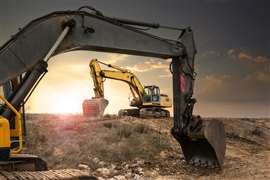 Image: AdobeStock
My other concern is what could be described as a high-handed approach towards customers who favour Chinese machines.
Every customer, big or small, needs to be respected for the choices they make today.
You simply cannot disregard those end-users, and they may - after all - become much bigger companies within as short a period as 5 to 10 years.
That same approach has already been proven to be a strategic mistake when it comes to the continent of Africa, which is completely dominated by Chinese OEMs.
As recently as 15 years ago these suppliers were nowhere to be seen on the African market.
Also be aware that Chinese OEMs have a very complete product line-up and on top of that are the largest producers of electric construction equipment (according to Off-Highway Research).
Based on my experience I can say that setting up and supporting a Class A dealer network is the most challenging job for OEMs - or at least it should be.
I firmly believe that with a solid, financially strong dealer network, Chinese OEMs will gradually increase their market shares within Europe.
|
The author: Paul Burger
Paul Burger has decades of experience in the construction equipment market. He spent more than 30 years at Hitachi Construction Machinery (Europe) (HCME) and was general manager account management before he left the business in 2022. During his time at HCME he was also general manager of dealer relations and a member of the board at Hitachi’s UK business. Since 2022 he has led his own consultancy business, PB Management Consultancy. Paul can be contacted on Mob: +31 6 836 99 209, E-mail: [email protected] |

CONNECT WITH THE TEAM