



Read this article in 中文 Français Deutsch Italiano Português Español
Andy Wright column: what electrification means for rental

30 October 2026
The rental industry has spent spent decades building a successful model around giving customers access to equipment. Electrification could take that proposition much further, says Rental & Access International columnist Andy Wright.
AC/DC wanted to create ‘high voltage’ rock and roll, while Bob Dylan told us that ‘the times they are a-changin’. Now the construction sector is joining in, showcasing a future increasingly shaped by the electrification of the built environment.
But for the rental industry, electrification should mean much more than replacing a diesel-powered machine with an electric one. We have spent decades building a successful model around giving customers access to equipment without requiring them to own it.
Rental absorbs capital investment, maintenance, utilisation and residual-value risk while providing access to the latest technology. Electrification could take that proposition much further.
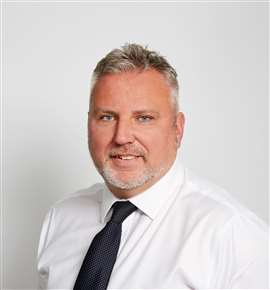 Andy Wright.
The machine is only half the story
There is understandably considerable focus on electric construction equipment. Manufacturers are investing heavily and the choice of electric excavators, access platforms and compact equipment continues to grow. Major infrastructure projects are now successfully using electric construction equipment to do the work of diesels.
Buying an electric machine is relatively straightforward. Keeping it working productively on a construction site is more complicated. Where does the electricity come from? Is sufficient grid capacity available? When and how quickly does equipment charge? What happens when several machines need charging simultaneously, or when the grid connection simply isn’t adequate? How do you get the electric ‘fuel’ to the machine? And there are many more considerations than this.
We therefore need to think about electrification as an energy system rather than simply a different powertrain. That system could combine grid connections, mobile and static battery energy storage systems (BESS), rapid charging, intelligent energy management and, where necessary, conventional generation. The objective isn’t necessarily to eliminate every generator tomorrow, but to minimise fuel use while delivering the energy and power a site requires.
Power versus energy
There is an important distinction between energy and power. A site might have access to sufficient electricity over 24 hours but not enough instantaneous power to meet peak demand - a challenge that becomes more important as larger equipment is electrified.
Battery storage can help. Energy can be accumulated when demand is low and discharged when demand peaks. Rather than designing the entire electrical infrastructure around a peak that may last only a short time, storage can help to smooth the energy supply and ensure it’s available as required. Combine that with intelligent charging and electrification becomes much more practical.
An opportunity made for rental
This is where things become particularly interesting for our industry. Contractors may be prepared to purchase electric machines, but will they want to own all the infrastructure required to support them?
Rather than simply renting an electric excavator, the opportunity may be to provide the machine, battery storage, AC and DC chargers, distribution equipment and energy-management technology required to keep it operating. Rental potentially moves from equipment as a service towards energy as a service.
That is the thinking behind SiteCharge, the business that my critical power business, VPG, has co-founded. Its purpose is to make temporary-site electrification a reality today by bringing together the equipment, energy infrastructure and expertise needed to keep electric assets productive. It reflects a wider shift in what customers may expect from rental companies: not just access to rental equipment, but a solution that includes an end-to-end package including the full electrical design, installation and a fully managed energy as a service (EaaS) solution.
Making things happen
There is a wonderful observation in Yes, Prime Minister (a UK sitcom from the 80s) that lots of people have the power to stop something being done, while very few have the power to make something happen.
That feels remarkably appropriate to construction electrification. The manufacturer can build the electric machine. The rental company can buy it. The contractor can specify it. Procurement can approve it. The sustainability team can encourage it. And the site can still discover there isn’t enough power available to charge it.
Perhaps one of rental’s most important future roles will be bringing those pieces together and making electrification happen. Rental companies already understand utilisation, logistics, service and data provision. Adding energy storage, distribution and management creates the possibility of providing an integrated solution rather than another individual product.
Economics will ultimately decide
None of this means diesel disappears overnight. Construction equipment has demanding duty cycles and some applications will remain difficult to electrify for years. Sustainability alone is also unlikely to drive adoption indefinitely. Successful solutions ultimately have to work economically.
That means looking at total cost rather than simply comparing the purchase price of an electric machine with its diesel equivalent. Fuel and electricity costs, utilisation, maintenance, grid constraints, generator running hours and productivity all matter. If electrification can reduce emissions, noise and improve site economics, adoption could accelerate quickly.
That leaves a fascinating question for the rental industry. Do we see electrification simply as the next fleet-replacement cycle - swapping diesel assets for electric ones? Or do we recognize that there is more to it than that, and that customers will need somebody to provide the infrastructure, investment and expertise that enables those assets to work?
The times certainly are a-changin’. Increasingly, they are a-chargin’ too.
| The author: Andy Wright
Since stepping down as UK & Ireland CEO at Sunbelt Rentals in 2024, Andy has developed an advisory portfolio. |

CONNECT WITH THE TEAM