


Read this article in 中文 Français Deutsch Italiano Português Español
Rating the rental industry: Inside the ESG benchmarks driving change

09 September 2025
Boels’ bronze award from EcoVadis highlights both the progress and the pressures facing Europe’s equipment rental sector, as clients and regulators push for more rigorous ESG disclosure. Lucy Barnard reports.
 Image created using Ideogram
Carmen ten Berge, Boels’ sustainability manager, is celebrating.
Last month the international equipment rental company was awarded a bronze medal by EcoVadis, the body that publishes sustainability ratings for more than 150,000 companies worldwide, putting Boels in the top 35% of all rated companies.
The rental company said it scored in the 82nd percentile, meaning it outperformed 82% of the organisations assessed.
“We are pleased with our bronze rating because that was our starting point as Boels Group,” she tells International Rental News. “Especially because we have had to align our sustainability processes across all of our operations. It’s a constructive benchmark and reflects our current position but also shows where we can grow and do better.”
Bronze for Boels
Boels operates in 27 countries under multiple brands, including Boels, Cramo, and its latest acquisition, Rival. The company has had experience with EcoVadis ratings for more than eight years, starting with its Swedish entity.
Sweden, Belgium, and the Riwal Group have achieved gold in the past, ten Berge says. More recently, the Netherlands and Finland received bronze ratings. Following acquisitions and integrations, Boels decided it made sense to consolidate assessments at group level to reduce administrative repetition and streamline the use of shared policies and documentation.
“This year, for the first time, we did the assessment for the Boels Group,” she says. “Otherwise you have to do it again and again and support from the group level with documents and policies so that the local entities can all achieve their ratings.”
 Carmen ten Berge, group sustainability manager at Boels
Much as it sounds good as a press announcement, ten Berge says the company’s decision to engage with EcoVadis ratings was largely driven by client requests, particularly in the Nordics and central Europe.
And EcoVadis isn’t the only ESG assessment in which Boels participates. Ten Berge says the company has also completed assessments with supply chain specialists IntegrityNext and Supplier Assurance. Moreover the company’s sustainability steering committee is currently discussing joining the Science Based Targets Initiative to assess its carbon footprint.
EcoVadis is particularly relevant to our medium and large clients, ten Berge says, and covers a wide sustainability scope, including environmental management, human rights, labour practices, ethics, and sustainable procurement.
“I would say EcoVadis has broader scope among our customers,” says ten Berge. “It’s well recognised across various European countries, which works in our favour given the wide range of operations we have throughout the region.”
For Boels, the EcoVadis assessment is closely linked to the group’s annual sustainability reporting cycle. Ten Berge explains that the official group sustainability team consists of three people, but local representatives—often HR, health and safety, or quality managers—support data collection across almost every country of operation. At group level, departments such as fleet, procurement, fleet excellence operations support, HR, legal and finance are also heavily involved, bringing the total number of staff engaged in data gathering to around 30.
Questionnaires are customised depending on a company’s industry and size, meaning larger organisations like Boels face extensive documentation requirements.
The administrative process
The Dutch entity’s EcoVadis assessment, for instance, involved approximately 200 questions and took ten Berge three months to complete the first time. This timeline included gathering up-to-date documentation, screenshots, and evidence from various departments and local management. For the consolidated group assessment, the process was shorter—about a month—thanks to prior experience and central coordination.
Completing a robust sustainability assessment requires dedicated resources. Ten Berge emphasises that it is not a task for a single person. The process involves cross-department collaboration, significant preparation, and rigorous adherence to documentation standards. “It takes some time to understand how these questionnaires are built, technically do that, and collect all the relevant information and navigate the platform’s technical aspects,” she explains.
With companies around the world facing increasingly complex ESG standards, ten Berge says supplying information to EcoVadis is also likely to help the company fulfil its legal obligations.
European legislation, including the delayed Corporate Sustainability Reporting Directive (CSRD) for large and listed firms, as well as national and regional laws, requires similar data covering everything from carbon emissions, health and safety to supply chain risk management.
“The due diligence legislation at local level is often complex and comprehensive,” she says, pointing to Norway’s Transparency Act, which covers both direct and indirect suppliers, and other EU directives aimed at supply chain due diligence.
Ten Berge stresses that no single rating or platform can address all legislative requirements. Companies often use multiple systems for supplier data collection, compliance, footprint calculations, and signing codes-of-conduct. “In most cases companies build on the systems they already have in place for core business operations and then look for additional modules or complementary tools to be compliant with sustainability related requirements,” she says.
Costs vary depending on company size and work involved, from basic ratings for a small company at less than €500 a year to premium services for large companies which can stretch to more than €20,000 for three years.
Of course, a number of Boels’ competitors have recently been awarded higher EcoVadis medals. Both Loxam and Kiloutou have received Gold ratings, putting them in the world’s top 5% of all rated companies.
Nonetheless, ten Berge says that she sees no evidence of customers switching to better ranked rivals.
“Having a medal is a great achievement,” she says. “Companies have different maturity levels. Everyone has to improve, because each year they add additional questions. It’s not fixed. Each year the expectations increase as new questions are added and the benchmark is raised even higher. So to be able to achieve, keep or improve your goal is quite intense and there is a lot of work in the background.”
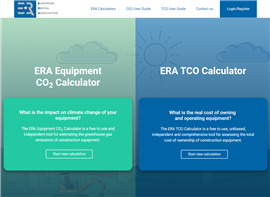
 Image: ERA
Ten Berge also highlights the educational benefits of the EcoVadis process. It reinforces best practices and raises awareness within the organisation. Many employees are surprised by the breadth of sustainability considerations beyond environmental impact, including labour practices, health and safety, and sustainable procurement.
“It’s still a little surprising for colleagues how much more we could do to strengthen our sustainability efforts,” she says.
Boels’ experience illustrates the scale of work involved in gaining a sustainability rating. But what about smaller rental firms, or those just starting out? Ian Corder, a management consultant at UK-based EPI Consulting, argues that strategy should come before data collection.
EPI Consulting, a sustainability advisory firm, developed the European Rental Association’s Sustainability KPIs framework to support rental companies develop their own strategies.
“[The actual legal requirements for sustainability reporting] depend a lot on company size, whether they are listed, and which countries they operate in. Even small companies can be subject to substantial reporting requirements if they’re part of a listed group,” he says. “The CSRD has undergone several revisions, shifting reporting thresholds to larger companies, but many proposals are still in flux, leaving uncertainty for firms trying to comply.”
Whatever the legal requirements, Corder adds that businesses will often find themselves asked to provide ESG data to larger clients as part of their reporting process. “Even if SMEs are less likely to be formally required under CSRD, 90% plus of the sustainability impact of large companies comes from their supply chains. SMEs are effectively compelled by commercial pressures to provide accurate data.”
Focus on strategy
For companies just starting on sustainability reporting, he advises focusing on strategy. “Know where you are today, where you want to get to, and how you’re going to get there,” he says.
Frameworks like the ERA KPI Framework, which includes an SME version, help small companies prioritise 30–40 key data points, from carbon footprint to human rights considerations.
Making the strategic decision of what areas of the business to focus on first—a “materiality assessment”—depends very much on the individual nature of each business.
“You’re effectively trading off water and carbon and human rights, which is really difficult to do,” he says. “When we do this professionally, we go through with quite a lot of rigour to try and figure out how bad any of the current impacts are and give a prioritisation to a company.
“In the normal way of things, what we tend to see is that companies do start by looking at carbon emissions, because they’re relatively easily understood and there’s a lot of data around. But understanding sustainability in the round and where any impacts might lie that your organisation is responsible for is an important thing to do. No one’s going to care how good your carbon footprint is if your health and safety at work is so poor that you’ve got employees being killed.”
Corder emphasises that sustainability reporting is more than compliance—it can be a differentiator. “Companies that can supply timely, accurate sustainability data gain credibility with major clients, improving tender success and long-term business relationships. Reporting is important, but the ultimate goal is to reduce your sustainability impact. That’s what drives meaningful progress and long-term advantage.”
STAY CONNECTED



Receive the information you need when you need it through our world-leading magazines, newsletters and daily briefings.

CONNECT WITH THE TEAM