


Read this article in 中文 Français Deutsch Italiano Português Español
Interview: Greener Power’s new CEO on renting battery packs
04 November 2025
Murray Pollok interviews Jasper van den Driest, the recently appointed CEO of Netherlands-based Greener Power Solutions, which rents and distributes battery energy storage systems in Europe. Before joining Greener, van den Driest was CEO of Vandebron, a Dutch energy retailer serving around 240,000 households with clean energy.
IRN: You joined Greener Power Solutions as CEO in September. How’s it going so far?
Jasper van den Driest: I’m 6 weeks in more or less, and yes, it’s been a great start, given the product, given the market, given the positive impact of the products and also the opportunity for growth. The market for mobile batteries is still in its infancy.
IRN: There are all types of business models with mobile battery packs, so who is your target market?
It’s twofold. In the Netherlands we primarily like a direct to the customer market approach. And outside of the Netherlands it’s mainly rental companies.
IRN: So, a re-rent model outside of the Netherlands, and within the Netherlands you’re renting directly to contractors. But you’re also renting to rental companies in the Netherlands or not?
Yes, but to a lesser extent. Our main customers in the Netherlands are event companies, contractors, and also grid operators for net congestion. In the Netherlands, net congestion is such an issue that, especially in the winter, they need a temporary power to prevent blackouts.
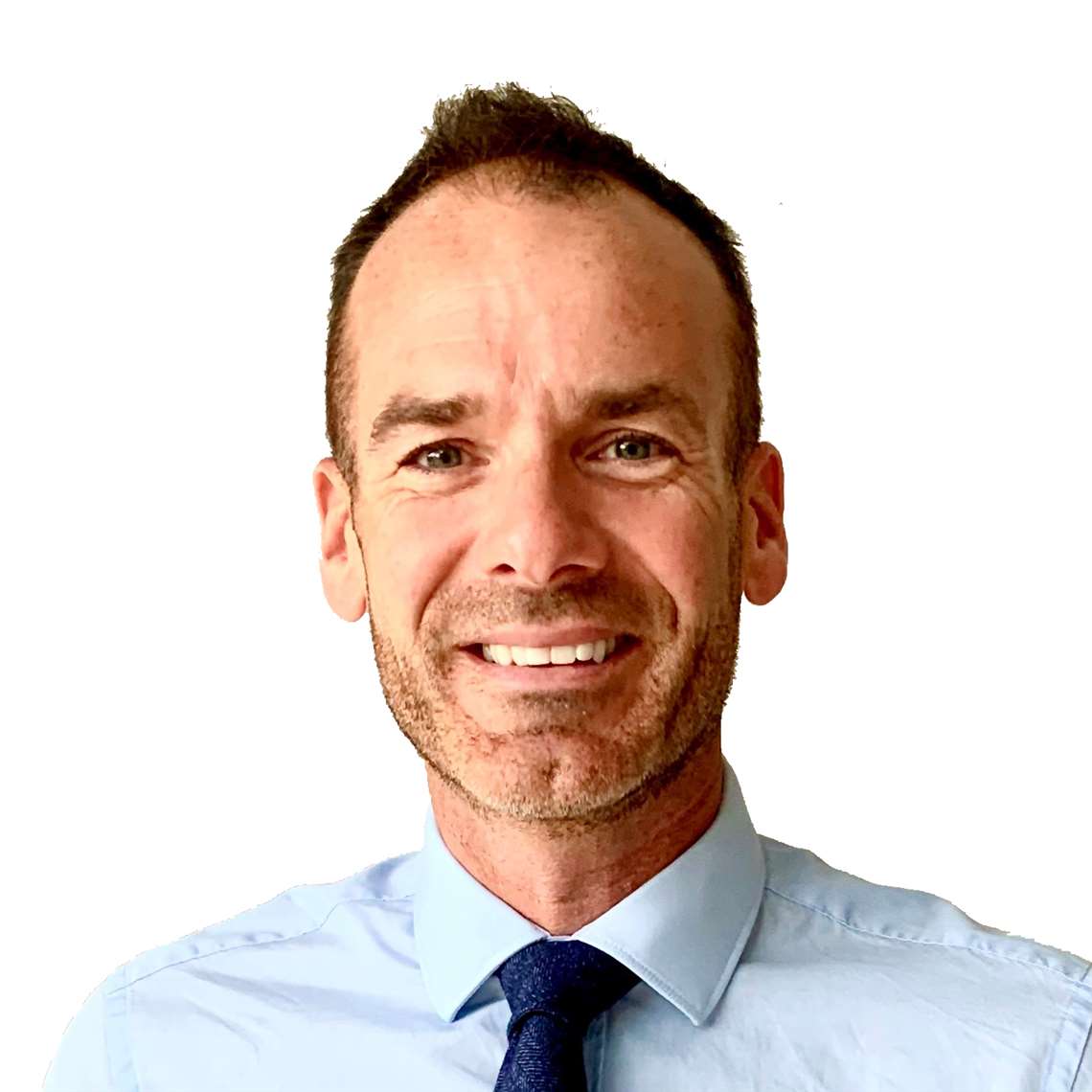
 Jasper van den Driest, CEO of Greener Power Solutions. (Image: Greener Power)
They need batteries off of all sizes, I would say. The stationary batteries, that’s a whole separate market and it’s larger scale, but mobile batteries for places in the grid that might be overloaded, the mobile battery is a very good temporary solution and very quick to deploy.
IRN: You have around 240 BESS units, including new units from your Dutch supplier Alfen under a recent €12 million order, which are currently being delivered. Where are these located?
About 80 or 90 are in the UK - the UK is a very big market for us - and then the rest are spread out across Europe where we are entering the market. So that’s the Nordics, we have five in Ireland, and we have a couple in France, Spain and Germany.
IRN: Why have you got so many in the UK?
It was the first major market where we invested in and built a team [outside of the Netherlands]. We have a strong team, and they were able to partner up with companies like Sunbelt Rentals and Power Electric. Fairly quickly, I think we started there maybe two and a half, three years ago, we built a big business based on this re-hire model.
We have a UK head office in Bristol and a depot in Colchester. And probably will need to open one more up north in Manchester.
IRN: And the customer base there, is it the same as the Netherlands, or is it more focused on construction and events?
More on construction, especially given the re-hire model - construction is clearly the biggest market in the UK.
IRN: And is the UK model your aim for the other countries in Europe?
Yes. The batteries are such a different operation than the diesel generator. It requires very sophisticated software, but also how to deploy it successfully, connect it to different sources, either a diesel generator or the grid or a solar park. You are basically setting up a micro grid.
Greener Power has this knowledge because from the start, it was as much a software as a hardware. Rental companies just don’t have that capability in house. They really need to partner with this specialized knowledge and also the energy management system, the EMS, to successfully deploy batteries in the field.
So we, we are partnering up with rental companies - really long term partnering. They see that electrification is a trend and they need to be able to supply battery powered microgrids. That’s where we come in.
IRN: It’s capital intensive, setting up offices and employing staff. What’s the time scale for the development in other European countries?
As soon as we have some traction and some success with customers. Those first couple of projects operationally we will handle out of the Netherlands. Then we’ll hire a field service engineer and, second, dependent on the traction with customers, the speed of the growth of the business, in parallel we will build the local organization.
In the end you need a local operational setup, as we have realized in the UK. So the UK in that sense is also like a playbook or a roadmap for growth in other markets outside of the Netherlands.
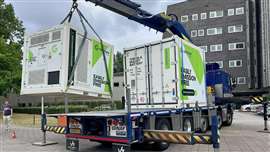 Battery packs being delivered by Greener Power Solutions. (Image: Greener Power Solutions)
IRN: How soon do you want to have fixed locations and staff in these other European countries?
As soon as possible, as this market is developing quite rapidly and we as Greener Power, given our fleet size and given our track record, have a clear first mover advantage. Say rough planning, the base case is to double our fleet by 2029.
It’s such a change in the way of working for construction companies, and they need to be ready to adapt this new technology. But once that’s the case, we see quite rapid scaling of batteries as a very good alternative, not just in the sense of less CO2 emissions and lower noise and no smell, but also economically.
I think that eventually the main driving force is going to be that, not in every setup, but in most setups, it will also be economically superior.
IRN: Is that the case now? Or not quite yet?
It’s a bit dependent on the setup. But I would say that already this is more often the case than not. Batteries have barely any moving parts and electricity is so much cheaper than diesel. And the long-term trend is that battery costs go down and diesel prices are going up. So we have a tailwind, I would say.
And also with additional taxation, like the ETS2 system [the EU emissions trading system that will apply a carbon tax on fuels] that’s going to be in place as of 2027, diesel prices will definitely go up and battery prices are dropping year after year. It’s a very good comparison with EVs and combustion engine vehicles. EVs are not just more fun to drive and better, in my experience, but also economical because the total cost of ownership is so much lower.
IRN: Yes. but for the next 10 years or longer, it is going to be a kind of hybrid solution where the batteries are used along alongside diesel gensets. What’s the typical configuration you would see on site?
It depends on the energy demand. We can put them in parallel - we had a festival in Denmark with 26 batteries, so a huge setup. But the most common one nowadays, you’re completely right, is a hybrid setup. So you have a diesel generator and connected to a battery, and the diesel generator can then run on a very low load, so it’s much more efficient.
Because a battery can supply power instantly, right? Much better than a diesel generator. So the CO2 emissions and also the diesel consumption already drops up to 80% if you connect a diesel generator to a battery. So, you already have a huge emissions gain, and efficiency gain. It can run on a low RPM constantly, and just like drip feeding the battery and the battery is the buffer. And if, like a crane or heavy equipment on a construction side needs instant power, the battery can supply it much better than the diesel generator instantly.
With a very constant demand, I think a diesel generator is often still the more economic - I would not say better - but more economic solution. But with a volatile demand profile on a construction site, a battery is very likely to be the better solution.
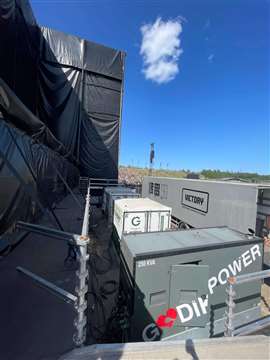 Greener Power battery units at an event in Denmark. (Image: Greener Power Solutions)
IRN: There is a big energy transition going on and you would imagine that rental companies will adapt and will have to become experts in battery management. What becomes your longer term model if rental companies inevitably become experts at battery management and battery ownership?
So there’s quite an entrepreneurial [aspect] to figuring out that strategy, but yes, I think we have some time. One thing for sure is that the energy management system is required.
The battery is at the heart of powering the whole construction site. So, the energy management system, it’s not just steering the battery, it’s managing all the assets on the site, and optimising the energy consumption, the supply and the consumption.
So, the energy management system of Greener Power is a microgrid. And I don’t see rental companies -because this is 100% a software capability - I don’t see them developing their own energy management system (EMS) for a microgrid setup. That’s what we already have and are heavily investing in.
So, besides the EMS, I think there’s still a lot of added value given our knowledge about batteries. But how that market develops, the honest answer is that it still has to be seen.
IRN: You are partnering with Netherlands manufacturer Alfen, using their Mobile X battery pack [all with 270kW power and energy capacities starting at 360kWh and going up to 720kWh]. Is that an exclusive arrangement for the rental market with them or they supply anyone?
They can supply anyone, but it’s hardware only. We developed our own software, the EMS, so even if they do sell a unit to someone else, most of them come to Greener Power for the software.
IRN: Would you supply the software system to an external customer if they wanted it?
Yes. And we have also developed it so that we can also use it on non Alfen batteries, so other makes.
IRN: So that part of your business strategy then to sell the EMS system?
To be honest, we have developed it - we’re quite technical company - because we could, and because there was customer demand, so now we have it, and now we are contemplating, are we going to productise it separately?
So, it’s very likely, but we have not taken that decision to actively market the EMS as a separate product. In partnering with different rental companies, some have used two or three batteries themselves and couldn’t get them to work, and they turned to Greener to say, can you help us out? Our technical people started to adapt the EMS to different makes and they managed to do so.
IRN: Alfen is your sole partner for batteries, you’re not using anyone else’s batteries?
Yes, and also with the latest order, which is a significant order also for Alfen. Of course, we have looked at the market, every single supplier. The Mobile X is in its fourth generation and it’s also very much based on the feedback they got from Greener Power over a period of eight years, because we have so much field experience.
We did talk to other suppliers and we keep doing so, for sure. The current status - because there are not that many suppliers – is that the Alfen for mobile usage, the Mobile X, was clearly in hardware terms the superior product.
IRN: And the size of the unit, the 10ft container, that’s just the sweet spot, is it, in terms of output and size?
We think we might go larger, but then just more as an energy supply than energy distribution. So, the power would be lower, but the capacity would be higher. So it would be what we call a big dumb battery.
That is a logical extension of our product line that we’re actively looking into right now. So especially if more and more construction sites become 100% electrified and - we call this swapping, swap-out a large battery, like a power bank. We already see applications where this might be the optimal setup.
IRN: What kind of output and battery size would that be?
We’re still exploring this. We’re not set on that yet. But there are different solutions. It’s a less technical product, so we don’t think it’s a technological challenge at all. It’s more like a business case or logistic challenge to make that work.
IRN: And in that case the larger battery also charging other batteries?
Yes, that would be charging our Mobile X battery. Or maybe directly charging equipment. It’s like a charging unit for other electric equipment on the construction site. We think this is a very logical development.
IRN: Are you talking to Alfen about that and other suppliers as well?
Yes, all of the above. We’re not married to Alfen. Of course, we have very good relationships, but we are open as they are to work with others. I think that’s healthy.
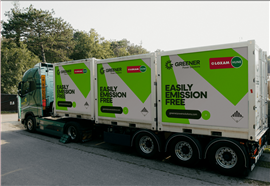 Greener Power Solutions has supplied some battery packs to LoxamHune in Spain. (Image: Greener Power Solutions)
IRN: Chinese manufacturers are doing a lot on batteries and battery packs. Have you considered Chinese products?
I think we’re not against it, but the mobile battery is quite a specific application. It needs to be very durable and tough, because it’s exposed to many different kind of environments, and of course there’s a lot of handling. So for stationary batteries or maybe for this bigger battery that we just talked about, China might be the logical place to be for now.
Given the high demand on specification we have not come across anything that’s remotely as good as the Alfen product.
And we keep it in the fleet for - I mean, they last a long time. So, for us it’s a depreciation question. If you have to pay 10% or 20% more, but the technical lifetime is like 15 years, you rather go for quality.
IRN: Battery technology is evolving quickly. How do you factor that into your fleet? Can you retrofit the battery packs with new battery technology?
The battery cells themselves, they’ll last a long time. I think that the oldest batteries now are seven or eight years old. They require some maintenance, but you can still deploy them in 80% or 90% of all customer applications.
But because there’s also some demand for customers that want to have a permanent battery, and then we’re open to selling our used batteries and renew our fleet. So we see ourselves also becoming the place to buy used batteries. They buy the whole unit as is. We already have some customers asking for this.
IRN: There is a lot of investment involved, not least the recent €12 million order. How are you funding the growth and investment?
This is prior to me joining the company. It’s private equity, DIF Capital Partners [through its DIF CIF III investment fund], which is a very well known, very large private equity company. They funded in two rounds, two and a half years ago. And six months ago they funded Greener with sufficient capital to scale the fleet.
And in parallel we’re able to finance also in the market ourselves. And I think after these 250 battery packs, and given our track record and that we are profitable, going forward we should be able to fund it in the open markets.
Expanding our fleet further, but this was not possible two and a half years ago. So that’s why the founders looked for an investor that was willing to put in the CapEx required to expand the fleet.
IRN: Are the founders still involved and who is the majority owner?
Now the private equity company has the majority. Of the two founders, one is still very much involved - he’s the COO [Klaas Akkerman]. And the CEO [Dieter Castelein], who I took over from, he left the company earlier this year, after setting up Greener Solutions and running it for eight years almost. He’s actively involved and of course has a lot of knowledge and expertise that we can still rely upon.
IRN: Is there anything else that want to add?
Let me say that the coolest thing about Greener Solutions - and it’s the case for every company that has to do with electrification - is that your mission goals go hand in hand with your business goals.
That’s quite special. There’s really no trade off. So, if we double our fleet, grow in business terms, we double our positive impact. It really goes hand in hand. And that is something a lot of people are enthusiastic about – the fact that you can grow a company while actively pushing the energy transition forward.
IRN: You are a business, you want to make money, but there is an ethos of sustainability in in the business still?
Very much. I mean just the name itself. I would say, if you come to the Greener office, you would experience a group of highly engaged and mission driven people. And that’s really cool. I think it’s a competitive advantage. We’re able to attract top talent who are highly engaged.
CONNECT WITH THE TEAM