


Read this article in 中文 Français Deutsch Italiano Português Español
What rental software firms are saying about AI

12 May 2026
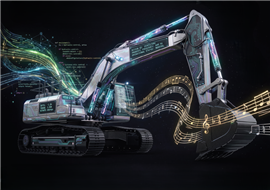 Are you in tune with your data? (Image: AI generated, KHL Group)
Australian rental tech firm Inauro has a nice way of describing the role of technology in a rental business, likening its Perspio platform to an orchestra conductor.
“Data arrives like musicians warming up before a performance—each playing their own tune…Perspio acts as the conductor, synchronising every data source, interpreting what is happening in real time, and cueing the right operational response at precisely the right moment.”
Without over-extending the metaphor, imagine equipping that conductor with AI. That’s what the company is now doing, adding AI‑powered automation modules designed to bring “deeper intelligence to maintenance, utilisation, allocation, and compliance.”
It says these modules help rental businesses “shift from reactive management to proactive, data‑driven operations.”
For Inaura, the most common request from customers is predictive maintenance and automated servicing; “Rental businesses want AI that can predict failures before they occur, trigger service workflows automatically, reduce unnecessary maintenance, and minimise downtime.”
 Software company Inauro has won a contract with Ring Power’s Air Compressor Group (ACG).
The second major area of interest, it reports, is utilisation optimisation and fleet right‑sizing, using AI to identify under‑utilised assets, recommend redeployment, forecast demand, and support purchasing decisions.
Safety and compliance is the third key area, with AI detecting anomalies or unsafe usage, automating compliance documentation, highlighting environmental risks, and reducing manual reporting.
Inauro says it is developing AI‑based tools to meet these needs, with a major focus on AI‑driven workflow automation, “enabling autonomous workflows that act on real‑time data and make context‑aware decisions across energy management, maintenance, allocation, and compliance.”
It is developing a predictive asset intelligence engine capable of forecasting maintenance windows and utilisation patterns, as well as AI‑enhanced customer experience tools, “including automated notifications, AI‑generated service summaries, intelligent actions, and simplified usage insights.”
Pricing analysis
UK software specialist MCS, meanwhile, sees customer data and pricing analysis as one of the most requested AI-related tools, helping rental companies to make “smarter, data-driven decisions” to boost revenue and customer retention.
“MCS AI Insights uses pattern recognition to uncover trends in rental frequency, preferences, and spending habits, automatically highlighting churn risks and upsell opportunities”, the company told IRN.
Also being requested is AI-enabled chat with equipment manuals, helping on-site engineers and equipment users to find information buried in manuals; “users can simply scan a QR code on a machine to access its manual and ask natural‑language questions directly about the asset.”
The UK-based company said it was expanding AI-driven summaries, search, and chat functions across the MCS platform; “These tools will make it easier than ever for rental businesses to access real‑time insights and make faster, smarter decisions”.
Three key use cases
Point of Rental, based in the US but operating worldwide, highlights three main use cases. One is visibility of fleet performance – helping to integrate fragmented data – and the second is maintenance and cost trends, helping rental companies identify ‘cost-heavy’ assets and tracking models or categories where maintenance is trending upwards.
The third is fleet ‘disposition decision-making’, which is helping rental companies make decisions on when to sell, hold, or reinvest in fleet; “Customers are looking for: clear thresholds (age, hours, ROI), data-backed recommendations, and confidence beyond gut instinct.
“AI helps turn what has traditionally been intuition-based decisions into consistent, repeatable strategies”, the company tells RAI.
It recently launched Rental Intelligence Suite, a set of AI-powered tools for rental owners, managers, operations leaders, and finance teams.
These include MyDashboard, which allows users to ask questions in plain language, such as ‘Show my highest ROI items’ or ‘What’s my maintenance spend this month?’
That is just one of numerous other AI-related functions available from Point of Rental. They will help with analytics (a view of asset performance across an entire inventory), benchmarks (comparing stores, regions, asset categories), and AI insights (a daily review to flag underused assets, rising costs, revenue trends, and seasonal patterns).
Others include a fleet disposition planner, a fleet balancer and a phone agent, which creates a voice agent to answer calls and create quotes.
Real-world operations
Klipboard, the software provider formerly known as Kerridge Commercial Systems, and which included the InspHire business, has unveiled Klipboard AI to provide what it describes as “practical, embedded intelligence”.
The company says its AI is not a bolt‑on, rather built directly into its ERP and operational platforms.
“AI shouldn’t sit on the sidelines or add complexity,” said DJ Jones, chief technology and product officer. “It should make everyday operations run better — and that’s exactly what Klipboard AI does.”

Klipboard AI is the first phase of the company’s broader roadmap that will introduce that it says will provide more proactive, task‑oriented intelligence, agent‑style capabilities, and Augmented Reality (AR) to support complex tasks.
“AI only matters if it delivers real impact,” says Ian Bendelow, Klipboard’s CEO. “We’re embedding intelligence into the systems our customers rely on every day — where accuracy, timing and visibility truly count.”
Extracting value from telematics
Trackunit, meanwhile, is helping customer extract the maximum operational value from their telematics data.
It is releasing several new IrisX Blueprints, available on the Trackunit Marketplace. Blueprints are reusable building blocks combining datasets, code patterns, and workflows that enable rental companies to deploy operational use cases without starting from scratch.
“The value of connected data is only realised when it drives action”, says Federico Rio, senior vice president Products at Trackunit, “and Blueprints give customers a direct path from data to deployment.”
|
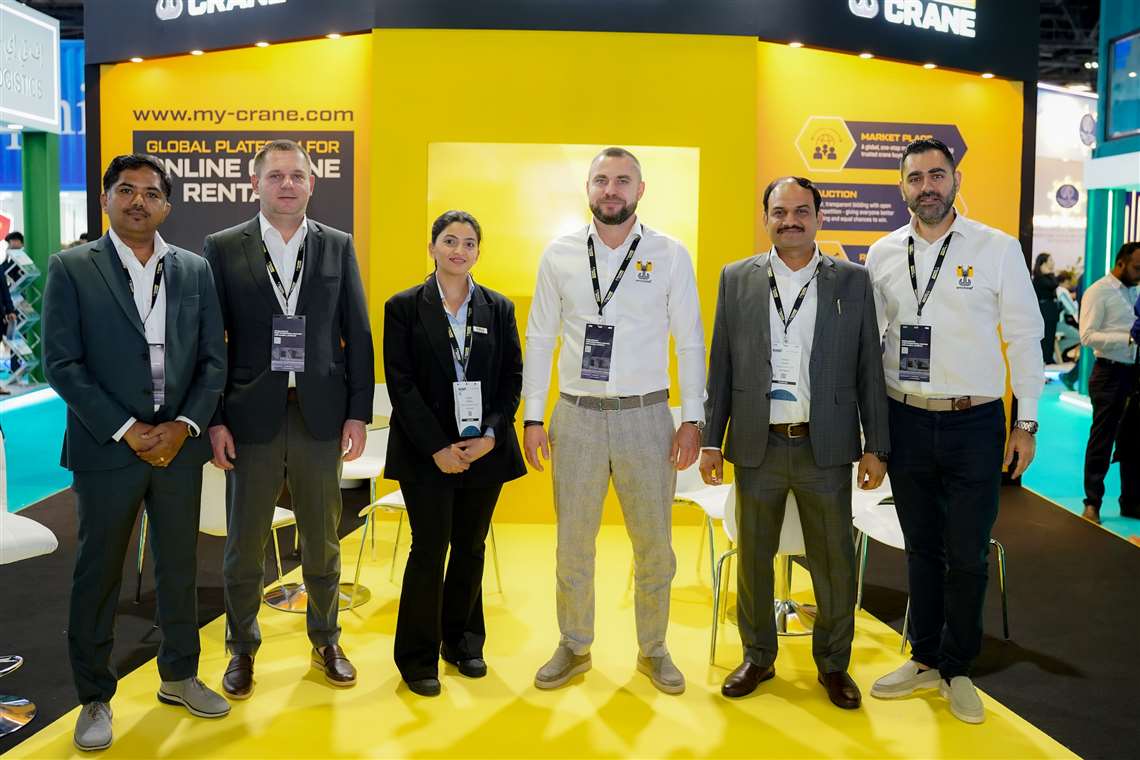
Crane rental platform There is no shortage of equipment rental online marketplaces, but MyCrane is unique in being focussed on the crane market worldwide. Andrei Geikalo, CEO of Dubai-based MyCrane, says digital procurement is gaining traction in rental; “In India, for example, MyCrane has now surpassed 1,000 registered customers and 1,000 suppliers, with more than 100 paid orders completed. “We are increasingly seeing major contractors and EPCs using the platform to identify and compare crane options quickly”, he says, “often achieving measurable cost and time efficiencies in the process.” A new component of the business is MyCrane Trading, offering the purchase, sale and leasing of lifting equipment. It will enable customers to move from short-term project-based procurement to longer-term asset strategies. The company is now developing an AI-driven assistant that will sit at the front end of the platform to guide users through the procurement process.  Andrei Geikalo, centre, with MyCrane colleagues. Andrei Geikalo, centre, with MyCrane colleagues.
|
Three Blueprints built specifically for mixed-fleet rental operations are now live: smart servicing and triage; out-of-contract usage detection; and custom reporting.
The first of these scores every returned machine on real usage data so depot teams can fix what matters, skip what is healthy, and create faster turnarounds.
“The question we hear most often is not ‘can AI help me do this?’ but ‘can it just happen automatically, every time a machine comes back?’” says Rio. “With smart servicing, the depot team knows what to check before they have even opened the cab.”
What new developments can we expect from the company? This year it is launching an AI assistant embedded within the platform, allowing users to interact with IrisX in plain language.
Later in 2026, Trackunit plans to launch support for MCP (Model Context Protocol), an open standard that allows AI systems to communicate and take actions across platforms.
It will mean that customers will be able to use third-party AI tools — from suppliers like OpenAI, Anthropic, Google, and Databricks — to query Trackunit data and execute actions directly from those environments, without logging into the Trackunit platform.
“The direction we are moving in is clear,” says Rio. “AI in Trackunit IrisX will reduce the distance between data and action — for every rental company, regardless of their size or technical maturity.”
From experimental to practical
Celebrating its 25th year in business in 2026 is Iceland-based Annata, which is best known for its cloud-based A365 platform, based on Microsoft Dynamics 365.
In the rental sector it reports “a clear shift away from experimental AI towards practical, outcome‑driven applications embedded directly into daily workflows.”
It says rental businesses are looking for technology that improves response times, asset utilisation, and the quality of decision making, without adding complexity or risk.
Among the workflows that Annata is working on is assisted rental quotation, using AI to interpret inbound enquiries, extract required hire details directly from emails and documents, and generate Dynamics 365–native rental quotations.
The quotes generated are then routed for rapid human approval rather than manual re-entry. It says quotation turnaround time has a direct correlation with conversion rates.
Cross-system visibility
Another area of demand is cross‑system visibility, particularly between customer-facing applications and core rental operations systems. This covers things like fleet availability, item location, expected return dates, and viable alternatives.
“We are seeing strong interest in AI agents that can act as a governed bridge between these systems, allowing users to query operational data and receive context-rich answers without switching applications”, says Annata.
Other use cases include predictive asset utilisation and availability planning - using historical demand, seasonal patterns, and contract behaviour to anticipate utilisation levels – and intelligent service and maintenance prioritisation.
“In this context”, says Annata, “AI acts as an early-warning and recommendation layer rather than a replacement for human expertise.”
Still room for the human conductor, then.
STAY CONNECTED



Receive the information you need when you need it through our world-leading magazines, newsletters and daily briefings.

CONNECT WITH THE TEAM