



Read this article in 中文 Français Deutsch Italiano Português Español
Construction costs could continue to increase even if Middle East conflict ends

24 June 2026
Construction costs could continue to increase, even if an agreement to end conflict in the Middle East holds.
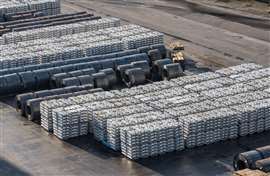 Ingots of aluminum and rolls of steel stored at a quayside. (Image: Adobe Stock)
That’s the warning from project and cost management firm Currie & Brown, which has published new research into the impact of oil price volatility on construction markets.
It found that steel prices in the UK could increase by up to 9.1% by September under a higher oil price scenario. Copper could rise by 5.5%, and aluminium by as much as 12.4%.
Demand for those materials remains strong, driven by investment in digital infrastructure, energy transition projects, and MEP-intensive developments such as data centres and retrofit projects, it noted.
UK data centre projects could increase by up to 6.8%, while hotel projects could see costs rise by around 7%.
In India, steel prices could rise by up to 18%, driven by strong domestic demand and reliance on imports.
Singapore, by contrast, could see steel costs increase by 4.3%, partly because major projects have already secured materials through early procurement.
Nick Gray, chief operating officer, UK and Europe at Currie & Brown, said, “A peace agreement between the US and Iran may have been reached, but the impact on construction will not disappear overnight. In the UK, we expect the cost of key materials to remain elevated for some time, as higher oil prices continue to feed through supply chains and manufacturing costs.
“For project owners and investors, the challenge is understanding the risks early and building resilience into delivery plans.”
Alan Manuel, group chief executive Officer at Currie & Brown, said: “Construction projects don’t stop every time markets become volatile. Investment decisions still need to be made, contracts still need to be signed, and programmes still need to move forward.
“Events like this are becoming a more regular feature of the operating environment. Whether it is geopolitics, inflation, trade policy or supply chain disruption, market conditions frequently change quickly and often with little warning.
“The organisations best placed to succeed are not those trying to predict every disruption. They are the ones taking the time to understand the risks and build flexibility into their plans and delivery models from the outset.”
STAY CONNECTED



Receive the information you need when you need it through our world-leading magazines, newsletters and daily briefings.


CONNECT WITH THE TEAM