



Read this article in 中文 Français Deutsch Italiano Português Español
UK’s Lower Thames Crossing targets 150 zero-emissions machines by 2028

01 October 2026
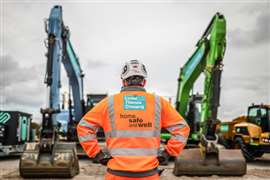 Image: National Highways
More than 30 zero-emissions construction machines are working on the UK’s Lower Thames Crossing, with the fleet expected to reach around 150 at peak construction in 2028, according to National Highways.
The deployment of zero emissions machines is expected to be among the largest for an infrastructure project anywhere in the world. Equipment already operating across sites in Kent and Essex includes 20-tonne excavators, rollers, tractors, telehandlers and hydrogen generators.
Work on the £11 billion road and tunnel beneath the River Thames began in early 2026.
The project uses a combination of electric, hydrogen-powered and hydrotreated vegetable oil (HVO)-fuelled equipment.
Conventional diesel has been prohibited on the project’s construction sites since 2025 in what National Highways claimed is a first for a major British infrastructure project.
Balfour Beatty holds a £1.2 billion contract with National Highways to deliver roads north of the Lower Thames crossing, which involves 10 miles of new highways connecting the M25 at junction 29 and the A13 with the Lower Thames Crossing tunnel at Tilbury in Essex.
The Bouygues Travaux Publics-Murphy (BMJV) is undertaking the design and construction of twin road tunnels under the River Thames, which at 2.6 miles will be the longest in the UK.
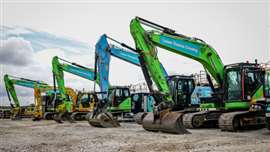 Image: National Highways
The project has secured green hydrogen supplies from British company GeoPura, which has invested in a production facility at the Port of Tilbury. According to National Highways, work at the northern tunnel portal site is being powered entirely by hydrogen.
Designated a carbon pathfinder, the Lower Thames Crossing is intended to demonstrate how construction emissions can be reduced at scale. National Highways said its approach had been adopted by organisations planning more than £30 billion of future projects, including Sizewell C, Anglian Water and East West Rail.
It received planning permission in March 2025 and the final allocation of public funding in November that year, allowing construction to begin and the project to seek private investment to complete and operate the road. Opening is expected in the early to mid-2030s.
Matt Palmer, chief executive of the Lower Thames Crossing, said, “We’re making real progress on the Lower Thames Crossing, and our ambition to make this the greenest road ever built in the UK means we’re cutting carbon on a scale that hasn’t been tried before. By putting these zero-emissions machines to work, we’re showing that the construction industry can break its reliance on diesel and these innovative low-carbon approaches can become normal practice on projects across the UK.”
STAY CONNECTED



Receive the information you need when you need it through our world-leading magazines, newsletters and daily briefings.

CONNECT WITH THE TEAM