



Read this article in 中文 Français Deutsch Italiano Português Español
The latest US tariffs changed almost nothing – with one exception

03 August 2026
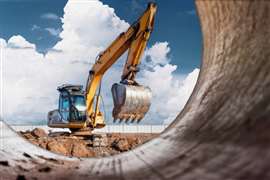 Image: Anoo via AdobeStock - stock.adobe.com
As the Trump administration in the US replaces one set of trade tariffs with another, Marcos Carias, North American economist, Coface examines why one important change could be significant to buyers of US construction equipment.
When a major round of tariffs recently expired, headlines covered it as a significant development. For most US construction equipment buyers, though, it changed almost nothing – with one important exception.
The tariffs that expired in July (Section 122) are being replaced by a new set (Section 301) covering the same goods at nearly the same rates. If you buy excavators sourced from Japan, or wheeled loaders from South Korea, the math on your next purchase looks about the same as it did before, even though one set of tariffs expired and the new set came into play.
The exception is Brazil, which is now facing higher tariffs than before and exports a significant amount of construction equipment, meaning it will ultimately hurt contractors’ bottom line.
And it’s an important one for US construction equipment buyers.
Brazil – a major supplier to the US
Brazil is the second-largest source of bulldozers, excavators, and wheeled loaders imported into the United States, behind only Japan. It accounts for roughly 12% of U.S. imports in this category. And a 25% country-specific tariff on Brazilian goods recently took effect. Add that to existing duties, and the effective rate on Brazilian-sourced construction equipment is now 37.5%. On a $200,000 excavator, that’s $75,000 more.
Unlike the blanket tariffs covering most U.S. trade partners, the Brazil tariff isn’t primarily about trade. It’s a political instrument, a pressure lever tied to the U.S. administration’s tense relationship with the Brazilian government, which is heading into an election. Country-specific tariffs like this tend to move with the diplomatic climate. If the political situation shifts, the tariff could come down. If it doesn’t, or if the relationship deteriorates, it could stay or get worse.
Not knowing whether 37.5% is the number you’re planning around for the next two years, or whether it disappears in six months, makes it nearly impossible to price a contract with confidence.
Japanese manufacturers are the most direct beneficiary. They’re already the dominant source of imported construction equipment in the US with no new tariff exposure, so buyers looking to move away from Brazilian suppliers have an obvious place to go. South Korean manufacturers like Hyundai Construction Equipment and Doosan are in a similar position, with established US presence and room to grow market share. For domestic manufacturers, Caterpillar and John Deere specifically, the tariff bites into their margins, as the cost of importing products from their Brazilian plants increases.
What buyers should be doing now
Right now, every instinct says to act. Switch suppliers, renegotiate contracts, lock in orders before the next announcement. But more tariff changes are likely before the year is out. The US government is currently investigating trade practices across sixteen economies, and that process is expected to produce a new round of duties before year-end. Companies that make major sourcing decisions before that picture is clear risk having to unwind them months later.
If you’re planning to move sourcing away from Brazil toward Japan or South Korea, don’t wait until you need the equipment. Those suppliers are already absorbing redirected demand, and lead times will stretch as that shift happens.
The first thing worth doing now is knowing what you’re actually paying. The rate in a headline and the rate on a specific piece of equipment have grown increasingly different. Exemptions are real, frequent, and worth checking at the commodity level. The second is documentation. When the International Emergency Economic Powers Act (IEEPA) tariffs were struck down earlier this year, the companies that got their money back had tied tariff costs to specific line items in their contracts and invoices. The ones who handled it informally didn’t.
For companies managing fleets across multiple sourcing countries, that means treating tariff exposure as an ongoing monitoring function, not something you revisit when a headline drops. The buyers who will be best positioned when the next announcement lands are the ones who are constantly mapping their exposure and building tariff provisions into their contracts.
Marcos Carias is North American economist at Coface, where he specialises in trade risk forecasting across the US-Mexico-Canada corridor.
STAY CONNECTED



Receive the information you need when you need it through our world-leading magazines, newsletters and daily briefings.

CONNECT WITH THE TEAM