



Read this article in 中文 Français Deutsch Italiano Português Español
Plant theft costs Europe’s rental sector €500m a year – nine steps to cut the risk

08 September 2025
Organised crime and fraudulent hires are fuelling rising losses for rental depots. But a mix of physical barriers, technology, staff vigilance and smarter insurance can significantly tilt the balance against thieves.
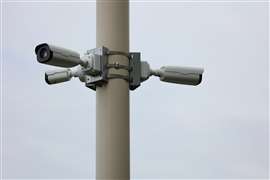 Photo: Adobe Stock
The theft of construction machinery is no longer a nuisance but a billion-euro drag on Europe’s equipment rental sector.
More than €500m (US$586 million) worth of rental equipment disappears each year — the equivalent of 30,000 heavy machines and hundreds of thousands of smaller tools — according to the European Rental Association.
And that figure tells only half the story: once downtime, lost contracts and spiralling insurance costs are factored in, the true bill can easily run to twice or even three times the headline number.
Organised crime networks are growing more sophisticated, and fraudulent hires are increasingly common. Vandals, meanwhile, cause damage by breaking into depots and sites, forcing entry through fences, doors and gates. Recovery rates for stolen equipment lag well behind those for passenger cars. In many cases, stolen machinery is swiftly moved across borders and lost to the legitimate market altogether.
Yet rental companies are not powerless. Last month the ERA launched a guide aimed at helping rental companies and their customers crack down on theft and vandalism. We picked out nine ways they suggested of reducing the risk.
1. Secure storage and access control
Depots remain the most obvious target. Strong perimeter fencing, heavy-duty gates and anti-ram barriers are critical in deterring opportunistic criminals and slowing down more determined ones. High-intensity lighting, combined with motion-sensitive CCTV and remote monitoring, creates an environment where thieves are more visible, audible and at greater risk of detection.
Depot layout also matters. Vehicles and equipment should be parked in ways that prevent easy removal — for example, placing larger excavators in front of smaller, more portable machines, or using buckets to block container doors. Small tools and accessories should be kept in locked storage containers. Crucially, companies should avoid blind spots where intruders could work unobserved.
2. Robust key and equipment handling
Many thefts are still the result of simple negligence. Keys left in machines, or hung in an unlocked office, offer an open invitation. Best practice is to store keys in a locked cabinet or, increasingly, in electronic key management systems that log check-outs and enforce accountability.
Staff should be trained to remove detachable control panels from equipment such as aerial work platforms, and to lock out ignition systems wherever possible. In some depots, operators now use smart cards, PINs or RFID access systems to ensure that only authorised personnel can start machines. These measures not only reduce theft risk but also enhance safety and compliance.
3. Employee training and vigilance
The most sophisticated security systems will fail if staff are not alert. Employees should be trained to recognise suspicious behaviour — for example, visitors loitering near machines or unusual requests from supposed customers. They should know how to report concerns promptly and be empowered to challenge unauthorised access.
Regular refresher sessions are essential. Theft prevention is often strongest immediately after an incident, but vigilance tends to decline over time. Some firms designate a security champion to act as a contact point and reinforce best practice. Building an “anti-theft culture”, where employees understand that lapses can jeopardise contracts and jobs, is one of the most effective deterrents.
4. Fraud prevention in hires
The battleground is shifting. Increasingly, criminals obtain equipment not by breaking into depots but by hiring it under false pretences. Fake identities, forged documents and cloned companies are all being used to gain access to valuable machines.
To combat this, rental firms are tightening verification. Multiple forms of ID should be required, and for high-value assets, double verification such as contacting the customer’s employer or verifying phone numbers in real time. Companies are also urged to cross-check details against fraud databases and to scrutinise email addresses from free domains.
Payment practices provide further clues. Criminals may push for cash deposits, or show unusual interest in deposit terms. Card payments, higher deposits for expensive items, and checks on credit limits all help filter out bad actors. Staff should also be wary of red flags: urgent requests, inconsistent stories, or mismatched equipment orders that make little sense.
5. Technology and asset tracking
Telematics and GPS tracking are becoming indispensable. Most large machines are already fitted with telemetry, but criminals are increasingly adept at disabling factory-installed devices, which are often located in predictable places. Rental companies can gain an advantage by installing secondary or covert trackers, including non-emitting devices that can be activated after a theft.
Advanced systems now offer geo-fencing alerts when a machine leaves a defined area, or notifications if a tracker is disconnected. Some firms link trackers to recovery services, which can work with law enforcement to retrieve stolen assets more quickly. Smaller equipment, traditionally harder to protect, can now be tagged with Bluetooth, RFID or Wi-Fi-enabled devices that connect to mesh networks.
6. Asset marking and recovery support
Clear asset marking makes resale more difficult and recovery more likely. Programmes such as CESAR in the UK, or the use of microdots, UV paint and DNA-based solutions, enable police to confirm ownership quickly. Crucially, asset registers should be kept up to date, with photographs and serial numbers readily available.
Visible deterrents, such as stickers advertising the presence of tracking devices or warning of forensic marking, may persuade criminals to move on. Poorly marked or unidentifiable machines, by contrast, often sit unclaimed in police compounds even when recovered.
7. Mechanical theft-prevention devices
Sometimes the simplest solutions are the most effective. Wheel clamps, track locks, towing eye locks and immobilisers physically prevent machinery from being moved. Equipment can also be parked strategically to create natural barriers — excavator arms can block doors, or machines can be bunched tightly together to restrict manoeuvrability.
These measures do not guarantee security, but they slow thieves down. The longer a theft takes, the greater the risk of discovery — a calculation that many criminals are unwilling to make.
8. Collaboration and reporting
Plant theft is not just an individual company’s problem but an industry-wide challenge. Rental firms that collaborate through associations such as the ERA or national rental bodies benefit from intelligence-sharing, early warnings about emerging scams, and closer relationships with law enforcement.
Rapid reporting of thefts is vital. Delays give criminals a head start in moving machinery abroad, after which recovery becomes far less likely. Internally, companies should share details of suspicious behaviour between branches to spot patterns. Externally, sharing information with insurers and peers strengthens collective resilience.
9. Insurance and risk management
Even the best-defended depot cannot eliminate risk. Comprehensive insurance cover tailored to the rental industry is therefore essential. Working with a specialist broker ensures that policies reflect the realities of plant theft and vandalism.
Insurers increasingly reward firms with lower premiums if they can demonstrate robust security practices, up-to-date risk assessments and regular staff training. Conversely, firms that neglect security face not only higher premiums but also reputational damage if they are perceived as soft targets.
Good record-keeping is vital. Detailed incident logs, security audits and equipment registers provide both insurers and investigators with the information they need. The process may seem burdensome, but the financial protection it provides can be the difference between recovery and ruin.
STAY CONNECTED



Receive the information you need when you need it through our world-leading magazines, newsletters and daily briefings.



CONNECT WITH THE TEAM