


Read this article in 中文 Français Deutsch Italiano Português Español
Interview: STAEDEAN on rental software and agentic AI

06 August 2026
STAEDEAN is a Netherlands-based developer of rental software as well as being a Microsoft partner. Murray Pollok spoke to the company’s Michiel Toppers, chief product officer, and Anastasia van der Wielen, product manager equipment rental, about AI and more.
Rental Briefing: It must be a uniquely complicated environment for software companies because you’ve got AI thrown into the mix. Everybody thinks they can create their own software.
Anastasia van der Wielen: Every challenge is a risk and opportunity. Why is it a risk? We were at the Microsoft office in Denmark just last week, and we were discussing this, because at the speed that AI is progressing right now it would be not that difficult to let it define the requirements for software, write the code, write the test scripts, execute those, and basically produce a new ERP system way quicker than 10 or 20 years ago.
It’s not there yet, definitely, because it still needs human control. It’s looking more like a five to 10 year timescale.
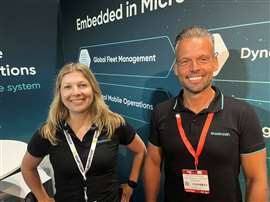 STAEDEAN’s Anastasia van der Wielen, product manager equipment rental, and Michiel Toppers, chief product officer. (Image: KHL Group)
What is Staedean’s approach? We are investing in our own AI department - so, it’s more people rather than less. What we do, though, is integrate AI in every single process in our company. Starting from implementation, methodology, following product development, research, everything.
And we integrate it in our products, all our market domains - manufacturing, data, life sciences, rental - we integrate AI in the process to deliver more value.
Michiel Toppers: I think the biggest role of a software vendor is that now more than ever, we really need to bridge business and technology. I think if you look where AI was last year, everybody was talking about the promise of AI, but really a lot of companies were still uncertain. What can I do? How can I use it?
That’s what we’re doing at Staedean as well. We’re trying to translate what is the value you want to give and want to get out of the AI agent itself, right? We’re not doing AI for the sake of AI, technology for the sake of technology. It needs to serve a purpose. And that is really what we try to work on closely with our clients.
And how do you make sure that the rental organizations are able to understand what it’s doing as well? Because they have a business to run. So how can you bring it together? That’s the goal.
And there’s a feeling that you have to launch products quickly because everybody is launching AI-related products.
Michiel Toppers: In general in software development, if you compare that to a decade ago, but now especially with AI, you need to be quick. The time to market, time to value, needs to be quick. That means that you don’t have time to build things in-house for a year and then maybe work with clients for another year.
No, you need to make sure that you have shorter iterations, test something with clients, validate the hypothesis that you worked on to see if it’s the right direction, and then you can move forward.
And the nature of AI is that you have to be very careful about what you’re issuing to the market.
Michiel Toppers: 100%. I think one of the unique values of what we focus on at Staedean is how do you make sure that whatever you deliver, you can monitor it’s following the right regulations, compliancy, the data is secure, secured with the clients.
And if something goes wrong…how can we update that to make sure that it’s giving the same response over and over? And I think a lot of people in the technology side are not looking at that total picture. And I think that’s what we really try to make right for our clients.
Does AI now allow anyone to create their own software? Is it a threat to software specialists?
Michiel Toppers: I’m not sure if I would state it as a threat. I think the way we see it, it’s going to push innovation more in the right direction. I can start to use Claude or Copilot and I will say, OK, this is what I need, help me build it. Everybody could do that.
But I think there’s still a fundamental difference between ‘everybody can build it’ and a solution that a rental organization can embrace and grow with. Because building it is one thing - you need to maintain it, update it, make sure that you’re compliant, make sure that if you have an audit or whatever that it fits the right purpose.
But the role of innovation or software solutions will change. I think software ERP solutions will always be relevant. We can talk about a system of record or system of intelligence - a lot of people are describing it like that. It is still very important. There may be other players, but I think the focus should be, what is the value? What can you do? You can create a lot of systems that can create a rental contract and do your pricing, but what do you do with that? What are the agents - if you talk about AI again - that leverage that in the best way possible?
STAEDEAN builds its products on Microsoft software. What benefits does that bring?
Michiel Toppers: There are a lot of technologies we don’t have to worry about. The fundamentals - we’re using Azure AI Foundry, we’re using Copilot. So the interface, how you engage with an agent or the technology to maintain an agent, that’s all out of the box for Microsoft.
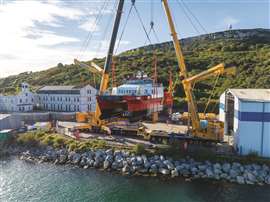 UK company Ainscough Crane Hire is using STAEDEAN’s ERP rental system. (Image: Ainscough)
Anastasia van der Wielen: I remember from a visit with Microsoft last week, they were showing their supplier communications features. It’s also the portal for vendors, and it’s all interconnected. Every single rental company needs to purchase equipment, and they would like to communicate about delays and requests with their vendor. Because we are fully integrated into the Microsoft package this is part of the house they cover.
Michiel Toppers: And that helps a lot because we don’t have to worry about the technology and the generic parts of a business that need to be taken care of. Microsoft is doing that. With that, we can go deeper, we can really talk about heavy cranes, aerial work platforms, the specific industry needs that are required in order to run a rental business.
When thinking about AI and rental software in the past, maybe they were viewed as separate things. But will rental software of the future just be a sophisticated AI package?
Michiel Toppers: Well, I think where it all started a year ago or two years ago is that everybody was thinking about how can I create an agent or a chatbot and do something with it? And since then it’s always AI bolted on to an existing process, to do a small step within creating a rental contract more efficiently or whatever.
I think where the future needs to go is what if the ERP or the transactional system is in the background? What is then the interface for the user? And it can be an internal person or an external person. How do they engage with the system? And I think that is going to change and I think that answers your question as well.
In terms of AI what is STAEDEAN’s focus on the rental side of things?
Anastasia van der Wielen: I asked my customers during our rental day, what are your key challenges, which job functions they think that AI can bring the most value.
They were explaining that they want to get equipment as quickly as possible to customers. Some of them already develop their own chatbots as an interface with them. They don’t want to lose a customer because the department is closed at night. And it helps customers select the right equipment. What they don’t have yet, and that’s what we are developing from our side, is to get real availability.
There were two use cases they selected - it was fleet management optimization and rental demand forecasting.
On forecasting, it is looking forward a little bit based on previous data, based on common projects, on the market conditions. What we see a lot, and it’s nice to see, is a lot of companies moving from reactive operations to a proactive approach. I think that’s what we as a software company need to help them with.
We are in the beginning of this process. And that is, let’s say, a challenge because we have customers who plan daily - so just two days ahead for them is sufficient - and we have customers who try to negotiate a project and they need to start ordering equipment today. They try to figure out what construction projects are there and what should they invest in today? It’s a time span of between one day and three years.
What is good about our solution, a fully integrated ERP, is that you have all your historical data present. That will be the starting point.
It sounds simple, but for rental companies it’s still the next step forward. Companies are asking already, but first we need to fully specify the requirements and make sure that it’s a generic solution. So how can we satisfy the customer with a three-year horizon and a one-day horizon?
There, there is another complexity to this because it’s not just equipment you have at hand, then you go further, because you have your rented equipment and your investments in new equipment.
We already have our equipment availability agent. It already can look into the future, based on the pre-planned orders. It’s functioning currently as an internal product, but we are currently testing with our customers how it works.
Any other functionality on AI that you’re going to be able to offer customers quite soon?
Anastasia van der Wielen: Damage detection. Defining damage based on the photos and also comparing with previous damages. We already have customer test results in South Africa and we also have a European customer to follow. It’s not something that just looks and sounds nice, It’s got to work, deliver value to customers.
You don’t want things to be detected which are not a problem, so you don’t overload people with notifications. But you also don’t want to miss anything. You just try to make this middle area as large as possible. And that’s what we do with customer testing.
And data is important, of course.
Anastasia van der Wielen: First of all, data is the foundation for AI, but also for other reasons. For companies moving from a reactive to proactive way of working, they need to have good data, and good analytics for decision making. And that is also how we started to look at STAEDEAN’s Data Fabric.
Michiel Toppers: Basically, Fabric is a Microsoft technology for analytics and prediction and we are creating a rental intelligence layer around our offering.
Anastasia van der Wielen: We launched it for the first customer and then we presented it at our rental day and there are likely at least five more interested because Rental Fabric can add more. Analytics is evolving. Getting data, quickly, being able to analyze, connect it with AI at the end as well. It’s something that we see already half of our customers wanting.
Second, we’ve upgraded our rental portal because we just needed to get the new technology, again to enable AI and all the communication with the agents, potentially.
The third strand that we are doing is going deeper into project-based operations, because we see that the requirements become complex. The rental business becomes more complex every year.
Project-based operations, with predictable planning, taking it all back into operations, execution, full financial control. That’s what customers need, and that’s what we’re investing in now as well.
We see that companies use project-based operations more and more. A lot of them first expect a financial component of it, so to fully understand what’s my cost and what’s my revenue. And it’s a critical question for margins. And if you organize it all into project, even if you don’t have a construction site outside, it already gives you the essential insights which they’re looking for.
Given how important data is, are you thinking about moving into telematics yourselves?
Anastasia van der Wielen: I think it’s more of an integration that we can provide our customers. And what we also see is Trackunit, which some of our customers use, they already build AI models on the data they have available. I think we don’t have to do it ourselves.
The telematics companies are moving into software, aren’t they?
Michiel Toppers: There’s a lot of telematics data, yes. What do you do with the data? How can you utilise it? How is that relevant for a rental contract? So basically, it’s the business case behind that. What’s the purpose? And I think that is being answered by software vendors like us.
We have a lot of use cases and scenarios where we are relying on telematics data. However, we just integrate with every solution. And I think that’s one of the beauties of our solution, but also the Microsoft Dynamics platform, that you have that open connection with any telematics company.
You sell to lots of business sectors, so how important is equipment rental?
Michiel Toppers: If you look at STAEDEAN today, we’re about 250 employees in multiple different countries. And you’re right, we have different domains that we serve. But all of those domains are closely connected to manufacturing. And rental is one of our strongest cornerstones of that domain.
And I can tell you why. That is because we see more manufacturing organisations moving towards service. Instead of selling equipment after their production, they are finding different models to go to market. Can be dealers, can be manufacturers themselves. So, in rental we see a diversification, that is why rental is such an important piece.
But we also have a lot of what we call hardcore rental companies in our portfolio, where probably 80% of their revenue is pure rental. And there we have a strong end to end solution where we see a lot of momentum and growth. And we just want to make sure that we push for that globally.
How much of your total business is in Europe?
Michiel Toppers: I think it’s about 65% - something like that. We have a growth strategy in North America. Europe, of course, the DACH region [Germany, Austria, Switzerland], the Nordics is important for us. UK and Ireland, also very important. So those are the ones we focus on in the upcoming years. We always work with a three- to five-year strategy, and let’s see what comes after that.
What infrastructure do you have in North America?
Michiel Toppers: Our model in general with our solution is that we want to position and sell ourselves through partners. So we are we are building the solution in close collaboration with our clients. Yes, we also have a workforce that is supporting partners, but basically the partners are positioning and implementing our solutions.
And then there are different ways of implementing it. We support them. But our goal is that we scale through partners. Roughly, I think it’s six or seven partners in North America.
Is acquiring other software companies or partners part of your strategy?
Michiel Toppers: Partners not, because we want to build a solution and sell through partners. Growing our services arm is not the main driver of our growth. But acquiring IP [intellectual property] is, and that’s definitely an angle that we are exploring every day, also with the management team and our private equity firm that is supporting us [Rivean Capital].
And your target market is mid- to large-scale companies?
Anastasia van der Wielen: Our equipment rental solution is built on Microsoft D365 F&SCM while STAEDEAN also provides solutions on Microsoft Business Central. We have a wide variety of customers while the majority have several depots, handle cross-border operations and/or project operations.
In the current market in Europe, what is the appetite for investment in software by rental companies?
Anastasia van der Wielen: [Software] and being prepared for the future, with data and AI applications, is no longer a luxury. Rather it’s a necessity because companies still have manual processes - a lot of potential customers we speak to have either disconnected systems or something they do manually.
On the one hand, you need to find money to buy an ERP and install and configure it, but on the other hand, if you don’t do it, you’re going to lose even more.
Michiel Toppers: I think in general, if you look into the growth of the ERP market and the software market, the economics are a little bit unstable. There’s a lot of things happening economically - it’s slowing down the market a little bit.
On the rental side, we don’t see that at this point. We see growth. Is that because of the rental penetration that’s still growing year over year? Or is the confidence restoring in the rental market after a few years of being down? I don’t know.
Thank you both.
CONNECT WITH THE TEAM