



Construction’s ageing workforce
20 June 2022
The issues stemming from an ageing workforce concern all developed countries, as demographic shifts are engendering a number of challenges, affecting many aspects of society and impacting different industries.
According to Centro Studi Ance, after the pandemic and years of lagging behind European averages, in 2021 Italy will become the fastest growing country in the EU. Construction was a significant driver of the country’ s growth, as the industry accounted for more than a third of its +6.5% GDP growth in 2021.
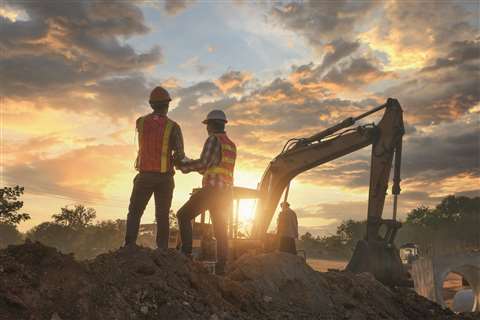 The construction industry is facing a challenge to attract younger workers. (Photo: AdobeStock)
Investments in the sector grew by +16.4% in 2021 with record numbers: production +24.3%, employment +11.8%, hours worked +26.7%. However, these numbers are not sustainable, as the industry – both in Italy specifically, and globally – is plagued by a very high average age and lack of interest from younger professionals.
According to some studies, 50% of the global construction workforce is due to retire within the next decade, and there is nobody lined up to replace it. This could have a huge adverse impact on the entire global economy.
Labour shortage in construction
The construction industry’s workforce is ageing and ageing fast: the number of employees above 60 is increasing more than any other age group, according to research from The Chartered Institute of Building (CIOB). This will have a serious effect on the industry, as essential skills will be lost when employees soon retire.
This is exacerbated by the fact that there are fewer young professionals coming into the industry to replace those retiring. This would also mean that the industry is losing a valuable teaching resource, as older workers often use their expertise and experience to help develop new entrants.
Construction workers’ high median age is just one issue contributing to the industry’s labour shortage and difficulty in recruiting new employees. While technology has advanced significantly in construction, it is still highly reliant on actual workers to operate, construct projects, and complete a variety of crucial tasks. Consequently, with so many individuals approaching retirement age, the labour gap cannot be filled solely though the deployment of technology-led efficiencies.
Innovation in construction
A fresher perspective from younger employees is important to drive innovation in the construction industry. Technology is having a major impact on the industry’s march towards the future as young innovators and technological advances have the potential to bridge the skills gap in the sector.
However, the industry faces difficulties in attracting the next generation of young workers into a sector that is seen by many as unappealing and out of date. With the industry’s reliance on the baby boom generation leading to higher retirement rates, attracting and retaining a younger workforce will be critical for business survival.
 Covid has forced the industry to adapt to new technology. (Photo: Adobe Stock)
Introducing new technology in construction could be a possible remedy given that it has the potential to significantly alter the workforce’s age demography, in addition to all the other advantages that turning digital brings. However, the construction industry has been slow to recognise the potential benefits of technology, and real progress in terms of adaptation and advancement has been steady. While Covid-19 halted worldwide activity, it also contributed in speeding up change and the acceptance of new technology.
Large-scale construction projects have seen huge gains in safety, efficiency, and productivity because of innovative construction technology. Overhead costs are cut, safety standards are raised, and projects are completed faster. Project management and site safety technology in the construction industry helped not just to simplify but also to make the on-site construction process safer, as increased control of the process allowed for better social distancing.
The sector has already shown efficiency, adaptability and resilience during a period of immense uncertainty in the past few years. It is key that we remember how essential innovation is in preparing for an aging workforce and consequently, a lack of workforce within the sector.
About the author

Angelica Krystle Donati is Head of Business Development at Donati S.p.A, an Italian construction company that has been working in the field of civil construction, infrastructure works, and historical building restoration for over 40 years. Angelica is President of ANCE Giovani, Italy’s national constructor’s association.
STAY CONNECTED



Receive the information you need when you need it through our world-leading magazines, newsletters and daily briefings.


CONNECT WITH THE TEAM