



Read this article in 中文 Français Deutsch Italiano Português Español
US AI infrastructure spend could hit $10 trillion by 2032

25 September 2026
Spending on US data centres and associated AI infrastructure could reach $10.3 trillion between 2025 and 2032, according to research presented at the Brookings Institution.
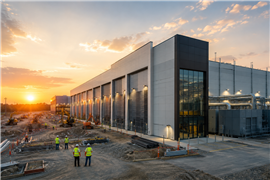 AI-generated image of a data centre under construction
The analysis estimates that the buildout could absorb around 3.6% of US Gross Domestic Product (GDP) annually – a greater share of economic output than the country’s railroad, interstate highway or telecommunications expansions.
The research was produced by Stijn van Nieuwerburgh, a professor of finance and real estate at Columbia Business School.
It estimates that the AI infrastructure boom will exceed the 2.2% of annual GDP absorbed by the US railroad expansion of the late 19th century, previously the largest comparable investment wave.
The buildout is being driven by construction of data centres and the power, computing and other infrastructure needed to support rapidly expanding AI capacity.
But van Nieuwerburgh warned that the scale of investment is increasingly stretching beyond what major technology companies can finance from their own cash flows.
FactSet data cited by The Wall Street Journal indicate that Alphabet, Amazon, Meta, Microsoft and Oracle are on course to spend a combined $4.2 trillion in capital expenditure over the four years to 2029.
An increasing proportion of that investment is being financed through debt, including special-purpose vehicles and other structures that can sit outside company balance sheets. The research estimates that generating sufficient returns on the investment would require the AI industry to reach around $3.7 trillion in annual revenue by 2032.
However, the scale of investment does not necessarily mean a downturn was inevitable.
“Strong growth in AI applications, high utilization, and continued improvements in model capability could support the projected infrastructure and generate stable cash flows,” wrote Van Nieuwerburgh.“But the combination of uncertain demand, rapid technological change, execution bottlenecks, and high leverage creates meaningful downside risk if expectations are revised.”
The data centre boom is already putting pressure on construction capacity, power infrastructure and equipment supply chains in parts of the US.
The research also highlights wider economic effects from the expansion, including rising demand for labour during construction and higher prices for computing equipment and semiconductors.
STAY CONNECTED



Receive the information you need when you need it through our world-leading magazines, newsletters and daily briefings.


CONNECT WITH THE TEAM