


Read this article in 中文 Français Deutsch Italiano Português Español
Interview: why has Turner Construction created its own rental business?
17 February 2026
Turner Construction Company in the US has established a rental business, First Equipment Company (FEC). Josh Ehlers, the national manager of the new division, explains all to KHL Group’s Murray Pollok.
The announcement in January by Turner Construction Company – one of the largest general contractors in North America – that it was creating its own equipment rental business prompted lots of questions in both the rental and contracting communities.
What did it say about Turner’s views on rental suppliers, and its approach to equipment sourcing? What is the scale of its ambition for the new business? And what is the end game, if there is one?
Josh Ehlers, the experienced rental manager brought in by Turner last year to run the new division, speaking to International Rental News on a video call from the US, is quick to make the point that FEC is targeting Turner-related business, which means its parent company plus joint-venture partners on major projects and the sub-contractors that it works with.
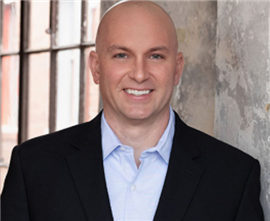 Josh Ehlers, who has extensive rental experience, has been brought in by Turner to be national manager of First Equipment Company (FEC).
“We’re really doing it in support of Turner’s endeavors”, says Ehlers, who has experience in rental and contracting with BlueLine Rental, EquipmentShare, Herc Rentals and JE Dunn Construction, “That’s how we’re positioned, and with our JV partners and our trade [sub-contractors].”
This year alone there will be around 40,000 trade contractors working on a Turner project somewhere in the US.
$10-15m rental fleet
FEC starts life with has a fleet valued at around $10-15 million – Ehlers makes the point that this scale of fleet might represent a single location for one of the US rental majors – and the plan is to grow that in the coming years.
“It’s not a far-fetched to say that there would be, in the next three years, $30 to $50 million in the fleet, working inside of our JVs, supporting Turner and the trades. The exact number is a moving target based on not just the work, but what we want to do and what trades we want to support.”
The company already has around 30 locations in the US – based on Turner’s existing equipment yards; “Those shops, by the end of 2026, will be FEC locations. So that’s going to be a shot in the arm, and it’s a really good footprint right out the gate.” Additional ‘on site’ locations could open in support of mega-projects.
The focus of the business, equipment-wise, will be site services; “So, think about lighting towers, generators, forklifts, skid-steers, sweepers, that realm”, he says, “It doesn’t matter whether it’s a high-rise or whether it’s a data center, it can be deployed on every project. That’s what we’re looking for in the first growth of FEC.”
Larger excavators and aerial platforms, for example, will not be a focus, at least in its initial period; “As we build out our fleet and build out our standards, we’ll look more and more into the opportunities of bigger dirt for civil work and things like that.
“But as far as scissor lifts and aerial work platforms, there’s a lot of safety and standards that come with those. We want to invest in the core competencies, the things that we really want to be good at from an ownership standpoint.
“It’s not that we won’t own scissor lifts and boom lifts and things like that, it’s just in this first year, and going into year two, those [site services equipment] are the core fleet that we’re focusing on buying.” Telehandlers is another product that it will keep in-house.
Why in-house rental?
Of course, North America has one of the most developed equipment rental infrastructures in the world, with several billion-dollar rental businesses. Why the need to have an in-house rental business?
“We want to have a dedicated group, a dedicated entity, that wakes up every day focused on the equipment side of it”, says Ehlers, “It’s no different than any other Turner affiliate company. We all have our core competencies and core focus. Ours is shifting to equipment, equipment management, procurement strategy, and logistics.”
As he says, many contractors have in-house equipment divisions; “Some of them are organized differently. It’s just how they approach it, how in-depth they want to get in equipment ownership and vendor management.”
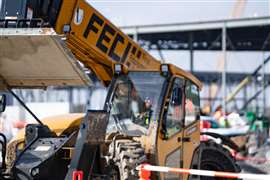 Telehandlers will remain a core item in the rental fleet of FEC. (Image: FEC)
One key benefit, he says, is that a central company coordinating equipment will simplify things on site; “because equipment delivery, equipment maintenance, equipment service creates a lot of foot traffic on sites.
“And the second you have a vendor who has the job to manage that, you see the foot traffic decrease, you see safety incidents decrease, you see less personnel that you have to keep track of, headcount management, all that stuff really starts to narrow. And that in itself is a huge benefit to Turner and Turner’s clients.”
Equipment management and mobilization takes time and energy; “And that time usually falls on superintendents, project managers and project executives who the clients expect to build the building.”
As he puts it, “we’re going a step further to make sure that every ounce of energy – the stress, the strain - that goes into equipment on the job site is taken off the project teams.”
Rental supplier relationships?
Of course, FEC and Turner will still be relying heavily on external rental suppliers; “[The spend on external rentals] is not significantly less. Even if you talk about $30 to $50 million in fleet, that’s like two good size rental branches. When you focus on core items like telehandlers, light towers, generators, yes, that category may decrease in spend.
“But all the rental companies are getting into different verticals. There’s a lot of things that they’re very good at that and we will want to lean on that expertise, right? Diversifying into trenching, shoring is probably not going to be something that we want to take on. We really want to lean on our rental partners for that support.”
That said, having FEC will give Turner more control; “There’s some machines, different manufacturers, that some of the operators are unfamiliar with it. Maybe it doesn’t operate the same as something that is a brand that they know. That’s the kind of the standard that FEC is looking to build.
“What do we want to have on site? What meets our safety standards? How new is the fleet? There’s a lot of rental companies that have fleet models that keep an average age of 4, 5, 6 years, but there’s some that can keep high utilization items longer than that.”
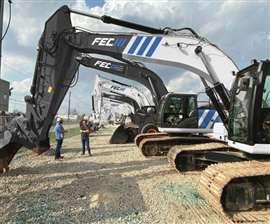 FEC does have some large excavators in its fleet, but big equipment like this will not be its initial focus. (Image: FEC)
Safety benefit
He highlights safety; “all of our equipment, our consumables, our gear, is it meeting Turner’s safety standards? Is it meeting our sustainability standards? That’s something FEC is able to have a day-one impact on, and really start refining that and tying that together.”
Ehlers makes the additional point that the big fleets owned by companies like Sunbelt, United, Herc and EquipmentShare are targeted at a very wide customer range, including events and other sectors where a company like Turner may not be focused.
“Now, post-FEC, the question becomes what do we really want to focus on and be good at? Because for us to be expected to be a United Rentals, a Sunbelt, a Herc is not feasible, because we work for a general contractor.
“It’s our one client, and our trades too, but it’s not the diversity of verticals, of industries…We’re just in the general construction world and the affiliated general construction. We are going to buy our own fleet, but it is going to be fleet that we can standardize and that we know we can utilise on every specific Turner project.”
FEC currently has around 65 full-time staff and it is working to build up its capacity and expertise, bringing in people from manufacturers, dealers and the rental sector; “people who understand the fleet, and more importantly people who understand the pain points that construction teams feel each day.”
Pilot projects were started last year – Ehlers came on board in March 2025 – and the focus now is on getting the message out to its internal and external clients.
Positive reaction so far
He says feedback so far has been very positive; “Everybody has questions - what does it mean? how do I get supported? what level of support? - but the second you walk through the shift in responsibility, for maintaining and managing the equipment, when it shifts to a company, it goes away from those trades managers and superintendents.”
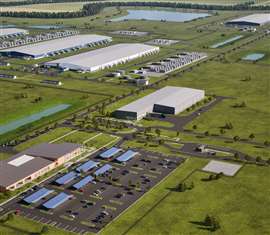 FEC’s parent company Turner Construction Co has a pipeline of projects, including this $10 billion data center for Meta in Lebanon, Indiana, US. Turner is a subsidiary German-based contractor Hochtief AG, which is itself owned by Spanish infrastructure group ACS. (Image: Meta & Turner Construction Co)
And there will be a lot of work to do. He says the pipeline of work coming up for Turner is positive; “I feel like it’s going to continue to be positive because there is a lot of things that you’re seeing come through, and ambitious projects that Turner is a part of. But other GCs are on great projects all over the country, and we’re seeing that continue to grow.”
And while data centres are a component of that, it’s a wider range of work as well, including sports stadia, airports, and healthcare work – for example, Turner currently has a dozen healthcare projects valued at more than $1 billion.
A colleague of Ehlers also on the call makes the point that scaling the FEC rental business will be reliant on that parent-company workload, and there is no grand target for FEC to be a $200 million business within a few years.
A final question has to be asked. Has Turner seen the price multiples for rental company acquisitions and concluded that it wants a piece of that action five years down the road? Is it building FEC into an entity that it can sell?
Ehlers is clear; “In all reality, we’re doing this to make sure that we’re in the best service of Turner and as a value proposition for clients. [A sale] is 100% is not part of the strategy.”
CONNECT WITH THE TEAM