


Read this article in 中文 Français Deutsch Italiano Português Español
Interview: new IPAF president’s vision for the access industry

14 September 2026
Kai Schliephake has spent 25 years in the powered access industry, moving from the manufacturer side to rental and, now, to the presidency of the International Powered Access Federation (IPAF). Here Schliephake shares his vision for the federation, along with the growth of safety and training worldwide.
Schliephake joined JLG in 2001 as managing director for Germany, Austria and Switzerland before moving to PartnerLift, where he is managing director of the Germany-based association for aerial platform rental companies.
 Kai Schliephake officially became president of IPAF in June this year.
His appointment to at IPAF’s AGM in June, where he took over the role from Karel Huijser, also formally from JLG, makes him the first German president of the federation, having previously been its first German board member.
This experience across both sides of the industry gives him a valuable perspective as he focuses on two key areas: expanding training and making IPAF’s expertise available to more people around the world.
Congratulations on becoming IPAF president in your 25th year in the access industry. Is the timing particularly significant?
Yes. I joined the access industry in 2001, so it is now 25 years. That makes it very special to become IPAF president at this point in my career.
I started as managing director for JLG in 2001, and that was also where I first became very conscious of safety. Unfortunately, during my time in that role one of my former colleagues died and another was seriously injured just after.
If you lose a very good colleague, or see somebody badly injured, it changes your mind about a lot of things you normally do regarding safety. It made me much more sensitive to safety activities.
I also learned a lot from Reinhard Willenbrock, who was my predecessor at JLG and subsequently became IPAF’s representative in Germany. I came to recognise him as something of the ‘godfather of IPAF’ in Germany. He showed me that the industry was not only about selling machines; it was also about working for safety and working for IPAF.
You have experience on both sides of the industry, first with JLG and then with PartnerLift. How does that help you as IPAF president?
I think it is valuable because I have worked for more than 10 years on the manufacturer side and then more than 10 years on the rental side. I have sat on both sides of the table.
PartnerLift and IPAF have another important similarity: both are member organisations. You cannot simply behave like the big boss and tell everybody what to do. You always have to consider your members and take them with you.
Without members, both organisations would be useless. We have a fantastic mission at IPAF, but we need to transport that mission through our members. We cannot do it alone.
The members bring different experiences and perspectives, and that is particularly important when we are talking about safety. Manufacturers, rental companies, operators and training organisations can all look at the same problem in different ways.
IPAF provides the umbrella under which they can come together and discuss those issues without a commercial objective. That is one of the things that makes the organisation so valuable.
You have seen major changes in attitudes towards safety during your career. What stands out?
One thing I remember particularly clearly is the debate around harnesses.
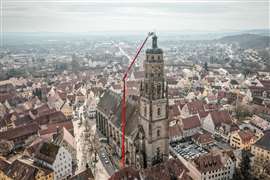 Family-run German rental company Wörlen, part of the PartnerLIft group, took delivery of a 100m working height Ruthmann Steiger T 1000 HF in January this year. (Image: Partnerlift).
About 20 years ago, I gave a speech at a BBI [German rental and construction machinery association] meeting about wearing harnesses. At the time, it was not nearly as common as it is today. Afterwards, I was asked whether I wanted to destroy the rental industry because customers might cancel their rental contracts if they had to wear a harness while others did not. People were saying, “How can you do this?”.
But my own experience also played a part. When I started with JLG, I was afraid of heights. It took me some time before I was comfortable driving a boom at say 20 m or 28 m.
Once I had been trained and gained experience, I became much more comfortable. But at the beginning, wearing a harness made me feel much safer.
How much has the attitude changed towards safety over the last two decades?
Enormously. When I started 25 years ago, there were no harness requirements in machine manuals in the way they are today. Now, if you look at a machine manual, you will normally find very clear information about whether a harness is required.
It is one example of how much more professional the industry has become. Training has improved, safety awareness has improved, and the whole industry has become more professional.
There is still work to do, but the development over the past 25 years has been very positive.
Digitalisation is another major change. How do you see that developing?
Digitalisation is a major challenge and opportunity for the industry. And now AI is coming on top of that.
Some people say AI is simply another form of digitalisation. I think it is more than that, but it is certainly something we are going to have to deal with everywhere, including IPAF and PartnerLift.
We are already seeing digital tools in areas such as service and maintenance. Technologies such as smart glasses have been around for years and may become increasingly important.
What does that mean for IPAF?
There is a lot of potential. For example, I believe that sooner or later we will see much more use of digital PAL Cards and licences rather than physical cards.
The million-plus downloads of the ePAL app show the appetite for digital licences, but there are still mature markets where physical cards remain very common.
If you start in a new country today, I would say, ‘start digitally’. There is no reason to establish a new market around a physical card.
The challenge is changing established markets. If people have used physical cards for 20 or 25 years, moving them towards digital takes time.
Does that also create challenges for trainers?
Absolutely. We have trainers who have been doing their job for 20 years using completely different methods.
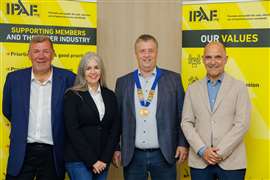 Peter Douglas, Julie Houston Smyth, Kai Schliephake and Pedro Torres.
When I started with IPAF, training materials were printed. We had PowerPoint slides and flip charts. Now trainers are expected to use laptops and digital systems.
For somebody who has trained in the same way for 20 years, that can be a big change.
At the same time, there is a fantastic opportunity here for people with decades of experience in the rental or access industry to become excellent trainers. They have seen almost everything.
For me, becoming an IPAF trainer can be a fantastic final stage of a career, and I hope to see more of that.
IPAF reported record membership growth in its 2025 financial year, (membership grew by 8.6%, reaching 1,957 members across 83 countries. Bangladesh and Guatemala were among the latest territories to join).
The numbers are fantastic, but they are the result of a lot of hard work by the whole IPAF team working day after day. People such as the regional representatives are travelling around the world to promote IPAF’s mission.
But the important thing is that safety is everywhere.
If we can establish a training centre in a new country and bring training to people there, it can make a real difference. Safety is something you cannot stop at national borders.
What are your priorities as president?
There are several, but the broad priorities are very clear: international growth and training.
I also want to see IPAF’s Toolbox Talks used more internationally. They are very familiar in the UK, but less so in some other markets. They are not a replacement for formal training, but they can be a very effective way of reinforcing safety messages.
Another priority is making IPAF more attractive to younger people.
I will announce my key initiatives at the IPAF Summit, taking place in Turkey in October.
You mentioned the initiatives of previous presidents. What would you like to carry forward?
Karin Godenhielm [IPAF President 2022-24) launched the Women in Powered Access initiative, which is very important, and we will continue. It is very valuable because it creates a place for people to share experiences as well as encouraging more women to take part in the industry.
Karel Huijser’s focus on storytelling is another initiative I believe is important. We are already working on new stories, and I am convinced that will continue.
These initiatives do not stop simply because one president’s term has ended
Why is attracting younger people so important?
The industry has a major skills challenge.
If you look at a construction site, it is not always the most obvious place to attract a young person. You are working outdoors in winter and summer, and it can be physically demanding. Other careers can look more attractive.
But technology can change that perception.
We should be showing young people the technical side of construction and powered access: advanced machines, digital tools, AI and all the innovation happening in the industry.
There is another important point. Many young people want a job that has meaning, not simply one that pays money.
Working in safety can give you that sense of purpose. At the end of your career, you can look back and think that you achieved something and made a difference.
How important will digitalisation and AI be to achieving that?
Very important.
We can use AI within IPAF to make the organisation more efficient, not to make people redundant. Translation is a good example. In the past, a lot of money was spent on translations. AI has the potential to make that process dramatically more efficient and allow our people to spend their time on other work.
We have plenty of opportunities to grow around the world, but we do not have unlimited people. So, we have to use technology intelligently to make our existing resources more effective.
Which international markets are particularly important for IPAF?
At the moment, I see four key areas: China, North America, India and Saudi Arabia.
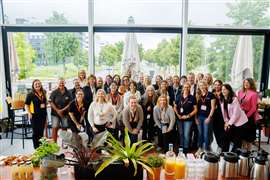 The 2026 IPAF Women in Powered Access breakfast.
They are all completely different. If you put those four markets into one pot, you have a fantastic mixture of challenges.
India, for example, is a market that I think will become very interesting in the future, although it will also be challenging.
North America is particularly important. The US has always been a more difficult market for IPAF because its training structure and business model are different.
What makes the US market different?
The safety level in the US is not below other markets. It may be the same or even higher. The challenge is the business structure.
Training can be delivered through manufacturers in ways that are less common in Europe, where rental companies often have a more direct relationship with the end user.
So IPAF has to adapt its strategy. We do not want to replace existing training structures. We want to cooperate with them and bring IPAF’s vision, mission and knowledge to the market.
What about the more mature IPAF markets?
We have to be careful not to focus entirely on international growth and forget where we come from.
The UK is an excellent example. IPAF has a very strong market position there and is widely recognised as the standard when people think about powered access safety. We should continue developing those mature markets while also expanding internationally.
The goal should not be to grow internationally by allowing the UK or other mature markets to shrink. We should grow both.
Looking ahead to the next 25 years, what would IPAF like to achieve?
We are active in less than half of the world, so there is an enormous opportunity in front of us.
There are many markets where IPAF can contribute to improving safety. But we should never forget the central mission: never stop bringing safety to the people.
Ultimately, the message is quite simple. Whether you are in Germany, the UK, India, China, Saudi Arabia, the US or somewhere else, people working at height deserve to go home safely.
That is the mission.
STAY CONNECTED



Receive the information you need when you need it through our world-leading magazines, newsletters and daily briefings.
CONNECT WITH THE TEAM