

Read this article in 中文 Français Deutsch Italiano Português Español
Inside Sarens’ push for sustainability: electric cranes, AI and data-driven operations

06 May 2026
As a world-leading company in the industry Sarens has a certain responsibility to push for sustainability, Yannick Sel, group commercial director – projects, tells Alex Dahm.
Many companies are willingly operating more sustainably than ever before while others are feeling mounting pressure to do so. One company firmly in the former camp is global heavy lifting and project transport specialist and crane rental company Sarens.
As a leading player on the world stage, the Belgium-based giant is also pioneering the incorporation of technology, new and old, in pursuit of its sustainability goals.
Heavy lifting and the demands of modular construction require big cranes. Sarens’ fleet includes a large proportion of the biggest super heavy lifters in the world. You might think the larger the crane the more environmental impact it has. In terms of economical operation with minimal environmental damage, some of these cranes are already fully powered by electricity.
Sarens in the Netherlands uses electric cranes to load monopiles for shipment to the Empire wind farm project in the USA
To gain insight into the company’s approach to sustainability and its use of technology I talked to its in-house expert Yannick Sel, group commercial director – projects. His job puts him at the frontline for the latest in requirements and practices, including for sustainability, from his clients.
Sustainability is vital to everything and people are beginning to accept it and respond positively. The focus here is the technology, systems and approaches involved and what impact they have.
I began by asking Sel how a push for sustainability has changed the way the company is run and how it has changed fleet investment decisions.
Green imperative
“The way we look at sustainability at Sarens is twofold. First, with our crane solutions and engineered transports, we’re able to support sustainable projects, such as projects around the energy transition, be it onshore wind, offshore wind or in the nuclear industry.
“The second way to look at it is how we come up with sustainable solutions – the way we run our operations. There we see our clients asking for input and for data. In Europe, people and companies report on their carbon dioxide footprint. In some countries it is mandatory.
“At the same time, we are really investing in coming up with sustainable solutions, for example, having electric cranes wherever possible. Most recently we added a 200 tonne crawler crane to our rental fleet, which we bought from Sany, in France. We’re looking to buy others as well.”
Sustainability is very heavily linked to technology, Sel says. “We already had electric SPMT [self propelled modular transporter] in 2014. At that time the battery technology wasn’t there yet. Now we are launching an ePPU [electric power pack unit], which we developed in-house. We’ve designed them so they can run for even an eight-hour operation without having to be recharged.”
It is pretty much like the developments with electric cars – technology has improved and it allows more sustainable solutions. “On top of that, Sarens had the first electrically-run ring crane – the SGC 90.”
It is fully 100 per cent electric, chosen because of sustainability but also because there are so many advantages in running it electrically rather than hydraulically, Sel explains.
“Not only that, the latest big crane we built, the SGC 170, is also 100 % electric. This was a decision made from the beginning. The plan is to electrify the rest of the Sarens giant crane (SGC) fleet, in the next couple of years.”
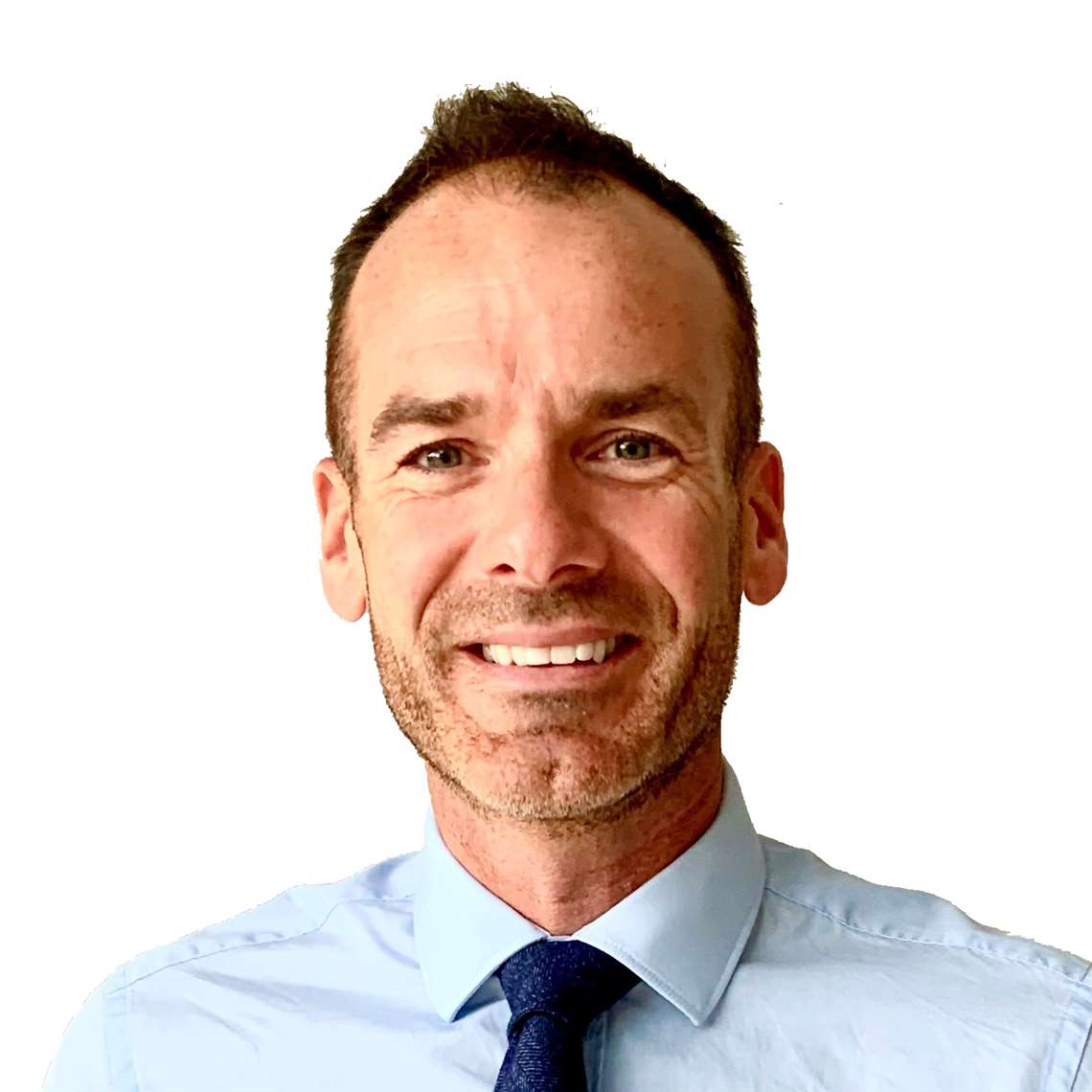
Yannick Sel, Sarens group commercial director – projects
Demand drivers
Is demand for sustainable solutions driven by clients and legislation, or is it something where Sarens takes the lead because it wants to do it?
“I’d say all of that and none of that, for the simple reason the factor of cost still plays a significant role. We push for electrically driven cranes, especially the ring cranes because we feel sustainability in decarbonisation is the way forward, also as a company.”
“It’s a transition and we’re looking for solutions. Listening to our clients, we do what they want and we make it as sustainable as possible.
“If world-leading companies like ours aren’t going to push it and come up with solutions, then I don’t think anybody will actually realise what is possible. We really want to want to push this.”
Much of the demand for electric machines comes from the Netherlands. It’s pushed by the government, Sel says, in that legislation already requires, for example, the reporting of data, on the use of electric equipment, reducing carbon dioxide emissions.
As a company Sarens prepared to meet the legislation a few years ago, installing the necessary IT systems to track all this so it doesn’t have to be done manually.
“At the same time, because you have to track that data, it also gives you a lot of insight, allowing us to optimise our operations and the way we maintain that equipment.”
The use of AI helped a lot there too, Sel says, “it’s also something we started using more and more, not only on the electrically operated equipment but also on other equipment. Getting insight into when you need to maintain equipment, what you need to maintain, doing predictive maintenance, or also predicting breakdowns can all be linked into sustainability. We’re gaining more insight every day.”
In terms of operations Sel says Sarens is ahead of the game on sustainability technology, already having photovoltaic cells on the roof of its headquarters and so on.
Equipment equation
“We definitely want to invest in electric powered machines because it’s giving us a lot of insight. And since we’re a world-leading company, it is our moral duty, our social responsibility, to push for that.”
Where are the electric and hybrid cranes you already have in your fleet also making commercial sense?
“An example is the electric crawler crane we just bought, we have mobile folding cranes from Spierings that are electrically operated and some smaller telescopic cranes. Apart from those, we developed the rest of the electric solutions ourselves – the ring cranes and the electric power packs for the SPMT. Do we get paid for it by clients? Not necessarily but we really believe there is a need for it. We have that vision on sustainability.”
Again, it’s a transition. Sometimes there are clients who are willing to pay something extra for it but not always, Sel says.
“The way we’re investing in it is because we believe in it. It is the way forward but it’s also giving us a lot of insight from using the equipment. We get a lot of data, information we can learn from to further optimise it.”
How much is the data side of it becoming important – beyond the black boxes installed already for many years to use data from the equipment for predictive maintenance? “We now added AI on top of that, which is also linking it to sustainability because it allows you to maintain your fleet in a more sustainable way.”
Black boxes already recorded when an engine was idling for a certain period. “We have set up the system in such a way the operator and the line manager get a message so we can speak to them and question why was this machine idling – weren’t you able to turn it off? Which is again also linked to sustainability.”
Total cost of ownership
With that black box data Sarens has already been gathering, is it useful in producing comparisons of total cost of ownership between the different types of crane – between diesel, hybrid and fully electric? How do you compare them, have you got everything in place?
“I would say we already have everything in place but it is a very interesting question. I think it’s still too early. We haven’t really used it for the equipment enough electrically to actually be able to do that comparison yet but definitely in the next couple of years.”
On sustainability-related data from manufacturers of cranes and transport equipment, are they all forthcoming, helpful and transparent in supplying it?
“Some of them are, some of them aren’t. With some, everything is really well documented and you can have everything from A to Z, whereas sometimes even for clients, if we have to provide them with some specific documents on our equipment, we really have a hard time to obtain the necessary information.”
Looking ahead
Sarens’ wisest equipment investment so far in terms of sustainable technology has been to electrify the big SGC super heavy lift ring cranes, Sel says. “If we had known all of this upfront the decision to go electric would have been a whole lot easier. It is not necessarily a financial benefit but certainly form a technical and environmental point of view it is a winning combination.”
In five years what will have changed to define the most competitive lifting and transport equipment fleet and the company as a whole?
“We will have electrified our SGC fleet. By then, I’m pretty sure, we will have a much larger fleet of electrically driven cranes, whether it’s telescopic or crawler cranes. And we will have expanded our fleet of electric power packs for the SPMT.
“Sustainability is about us enabling the energy transition with our solutions and looking at our operation itself, the equipment and the investments we’re making. If the equipment is not available in the market yet, then we develop it ourselves. That is the main message. As a world-leading company in our industry we have a certain responsibility to push for sustainability.
STAY CONNECTED


Receive the information you need when you need it through our world-leading magazines, newsletters and daily briefings.
CONNECT WITH THE TEAM