


Read this article in 中文 Français Deutsch Italiano Português Español
Allye Energy’s Jonathan Carrier on BESS and EV batteries

12 January 2026
Allye Energy is a UK-based manufacturer of battery energy storage systems (BESS) using re-purposed electric vehicle (EV) batteries. Co-founder and CEO Jonathan Carrier explains all to Murray Pollok.
Allye Energy has a lot of automotive and electric vehicle (EV) experience in its team. CEO Jonathan Carrier, for example, has worked for Jaguar Land Rover, Mazda and McLaren Automotive, among others. It’s no surprise, then, to learn that the company’s BESS units are based on re-used EV batteries.
“If you think about it, an EV is just a big battery on wheels”, says Carrier, speaking to International Rental News, “But that also means that when it comes to electrification, you’re building technology that’s fit for purpose relative to the durability.
“And if you think about automotive and a car battery, it has to undergo a significant level of durability testing…So we build our system around EV batteries for that very reason”.
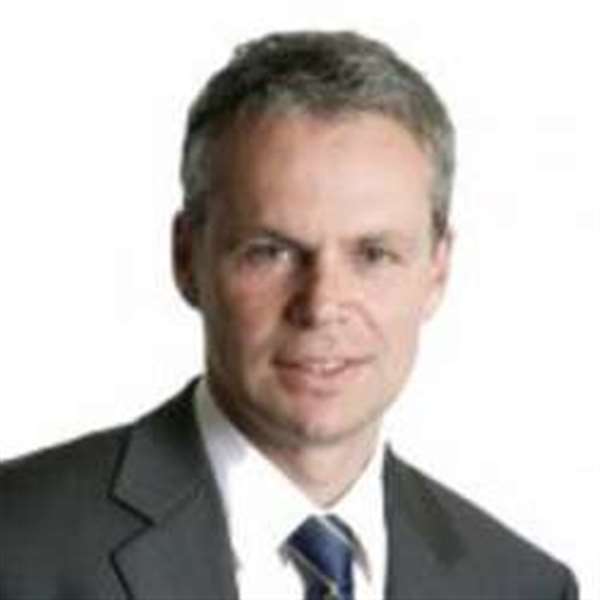
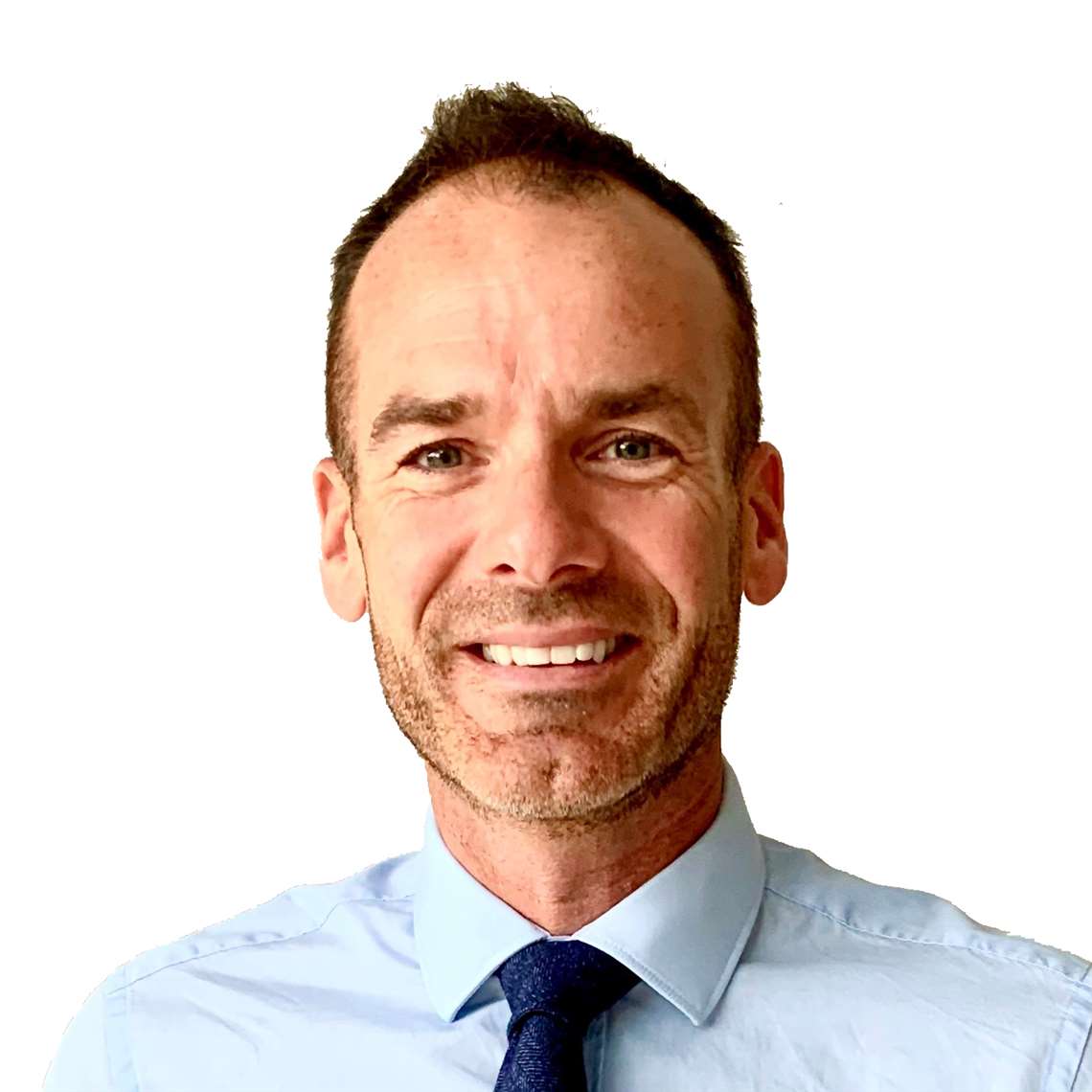
 Jonathan Carrier, co-founder and CEO of Allye Energy (Image: Allye)
In the case of Allye – which is based in London, has 13 employees, and was founded only a few years ago – that means what Carrier calls ‘second use’ batteries, as distinct from ‘second life’. Its batteries come from vehicles that have been prematurely written-off, after anything from a few days to three or four years old.
“We’ve built all of the technology and capability to test those batteries to make sure that they’re safe for repurposing and then integrating the entire system, including their BMS [battery management system], cooling system, everything else in their entirety into our system.”
One happy by-product of using EV batteries, says Carrier, is that they carry over the certification they originally had from the car, which means an exemption from the need to have an ADR licence when you carry a battery in the UK.
It is using Tesla batteries, but will use whatever is most widely available, including Kirin, Hyundai, Volkswagen, Jaguar and Rover.
“Our platform is designed to be entirely agnostic to any battery, and we can mix chemistries. So, if certain customers have concerns around more nickel-rich and NMC type chemistry, we can do systems with LFP, and as we get more Chinese vehicles coming into the European market, then of course, we’ll be looking to integrate those…We use Tesla because they’re the most abundant today.”
Large BESS units
Its current products are the MAX300, MAX500 and MAX1000. The 300 is available as a stationary or mobile unit, weighing less than 3,5t, and with a capacity of more than 320kWh and power options up to 280kW. The MX500 units provide 500kWh/420kW of power, and the largest MAX1500, weighing up to 12t, offers 984kWh capacity and 420kW or 840kW of continuous power.
The MAX500 is the first system in Allye’s range to have DC fast recharging, enabling replenishment from 20% to 80% capacity in approximately one hour.
These are not small BESS units; “The 300 is actually pretty compact”, says Carrier, “It fits in a standard parking space. And that can be towed under 3.5t. You won’t find another battery with the same energy density and power that’s under 3.5t.
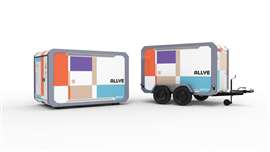 The MAX300 comes in two versions, including a trailer model weighing under 3.5t. (Image: Allye)
“Compared to a unit that’s 10, 20, 30kWh, the 300 is pretty big, but what I’d say is we’ve built a modular architecture that we can scale up and down.
“So, whilst the 300 is our smallest today, nothing stops us in the future building a smaller unit if a customer wants one…we could easily build a150kWh system with 350kWh batteries, or a 90kWh system with 330kWh batteries. Our architecture is modular.”
The company has been supplying the events and TV/film sector, as well as construction; “I’d say that our larger units very much have been driven by the needs of construction. For example, the 300kW unit plays very much more to the film and television, to utilities, where they’ve got much shorter duration needs.
“The larger units, someone like [UK customer] Collins Earthworks, and other customers we’ve got in the pipeline, they need much bigger units because they’re having to charge excavators or trucks or something like that.”
An even larger MAX1500 model is now under development. “You need more and more power and you need more and more capacity, basically, especially in grid constrained sites…We’ve finished the Collins unit [MAX1000] and that’s validated our ability to engineer that.” Carrier says a MAX1500 could be ready in 12 to 30 weeks if ordered.
Targeting the rental market
Equipment rental is definitely a target market for the business. Its largest rental customer is Horizon Plant in Ireland, and Allye recently signed a three-year sales and service deal covering Europe with the UK’s Vital Power Group, with Vital also having non-exclusive sales rights globally. Vital recently ordered five MAX500 units for its own rental fleet as part of the three year deal.
“I’d argue the power rental sector is our most important sector because that’s where our biggest customers are today”, says Carrier, “It’s who we’re speaking to on a regular basis and those that have shown a significant level of interest.”
It has both power rental specialists and generalist rental firms in its sights. “You’ve got the smaller players who can be more agile, who can perhaps change their fleet and the makeup of their fleet to be more responsive to their customers.
“The larger players clearly have their own economic assets that they need to be able to deploy, and they are actively looking at batteries and deploying clean technologies. Just they have slightly more inertia in terms of how they operate their business.”
 An Allye MAX 1000 battery energy storage system in the fleet of Collins Earthworks. (Image: Allys)
He says Allye has considered a kind of re-hire model, but it will not be a priority; “We want to be an ally to our customers, not a foe - it comes from the name of our company. And I think if we were to get into the direct hire business, that would put us in competition with our customers, which we don’t want. We want to be an enabler and a supporter for them.
“I think where re-hire can really work is for the larger power rental businesses, where perhaps they cannot de-fleet legacy assets as quickly as they might want…In the future that could be something we look at”.
Quality of power
Carrier says the business offers other benefits to potential buyers, which is the ability to produce very well controlled power, something that is crucial in events/TV and with utility companies.
“We have the capability to manage the quality of the power that it delivers”, says carrier, “that’s very specific for the unique applications of film and TV, for power rental for events, where they need high quality power, not just any old 3-phase, which can lead to a generator tripping or flickering or a power interrupt.”
He also says it can produce the units competitively priced. “We architect our battery system differently to most of the people. We’ve taken a lot of cost out and we think about it like a car.
“And we re-purpose the electric vehicle batteries, which means we can get a very competitive price, relative even to buying brand new cells from China, and because we’re carrying over the entire vehicle battery into our system.”
The company has an open mind on manufacturing, and is even considering production in Asia Pacific, where he sees a lot of opportunity.
“Our whole philosophy is built on a decentralized manufacturing strategy”, says Carrier, “So our facility here in the UK is to serve UK and Ireland. And then wherever we go and the demand in the market is, then we will have regional manufacturing hubs where we source the batteries locally.
“We’re very much open to partners around the world, whether that’s distribution partners, local manufacturing partners that will allow us to build locally and meet the needs of the market locally.
“I’ve recently been to China, Singapore, and we’re looking in South East Asia. We know that there’s a significant opportunity in South East Asia because they’ve got a number of grid challenges. They already use a lot of diesel generators.”
Engineered for scale
He says they can take more cost out because they have already engineered the units for scale; “I’ll come back to the very start of the conversation, where I said we think of it more like a car, a battery on wheels, but without the wheels, the motor or an interior, but everything else is pretty much the same.
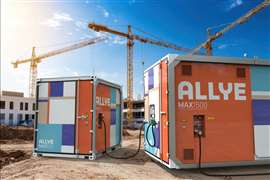 Allye Energy’s MAX500 BESS unit. (Image: Allye Energy)
“So, if we can engineer it with that same philosophy for scale, for cost, for quality, for durability and reliability, then actually that can stand us in very good stead for expansion into the rest of the world.”
The aim is not rapid growth at the expense of cash management; “What we’re conscious of is, if we’re going to appeal to a market like your readers, they want to know that if they’re going to invest in an asset that company’s going to be around for the next 10 plus years.
“We need to build a sustainable business that is based on a strong footing on profitability and then we can look to expand.”
Not 0 to 60mph in three seconds, then, and possibly all the better for it.
STAY CONNECTED



Receive the information you need when you need it through our world-leading magazines, newsletters and daily briefings.

CONNECT WITH THE TEAM